

Last time, I shared some fruits I really love and this time I will share some favourite seasonal savoury ingredients.
In a country like Singapore, seasonality is not a strong concept and fruits and vegetables are readily imported. Some might even be grown here, thanks to different technological breakthroughs. We are not motivated to only eat certain ingredients at specific times of the year.
But I love to eat seasonally. These ingredients are at their peak when grown according to their natural cycle, and if you’ve tasted them before when travelling, you’ll know they’re especially delightful at the “right time”.
These are some of my absolute favourite savoury ingredients; and are also available in Singapore at specialist grocers at the right season!
White Asparagus, from Germany
Asparagus stays white because they are harvested while they are still “in the soil” – a process that stops chlorophyll from producing, keeping the stalks ivory-white. The asparagus thus form a milder, sweeter flavour than green asparagus. I prefer the thick-stemmed ones.
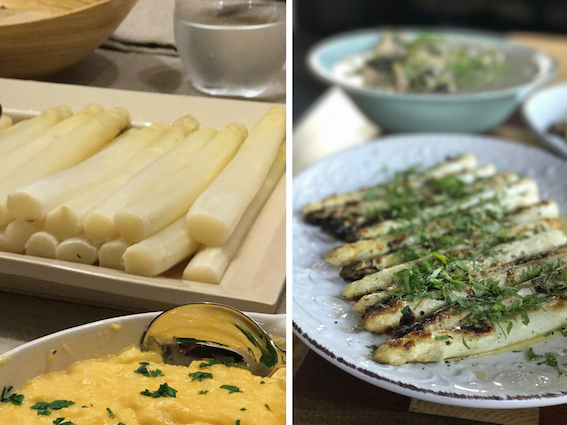
L-R: Steamed white asparagus and grilled white asparagus - image credit Bing Blokbergen-Leow
Depending on the origin, white asparagus can be purchased from mid-April to end June. I highly recommend the white asparagus from Germany ; I always look forward to the ones in May from Guetersloh, Germany.
I used to take an annual work trip to Germany in May, and before leaving, I would make a point of directly visiting a particular white asparagus farm to buy as much white asparagus as would fit in my luggage. My record was bringing 18kg of white asparagus home from Germany.
Even now when I am no longer with the same company, some of my friends still head that way during May and they often kindly bring some back from that farm for me.
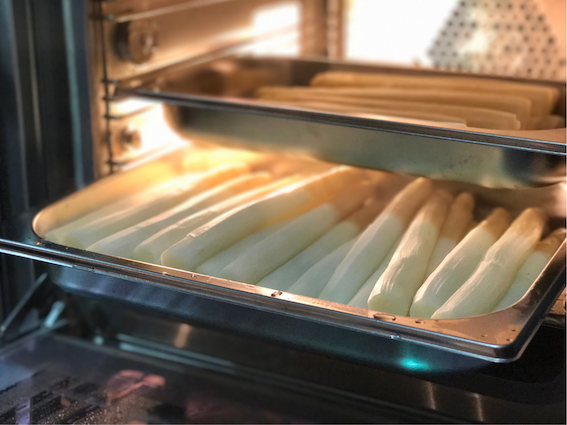
Image Credit Bing Blokbergen-Leow
The best way I know to prepare them at home: steaming them. I use my Miele steam oven, 100 degree celsius steam function on automatic programme. This steams them for around 8-10 minutes. I eat the asparagus with cured meats, scrambled eggs, and Hollandaise sauce. Any trimmings are saved and we would make asparagus soup with them. So good!
White asparagus first becomes available from the South of Europe and then the North based on temperatures. You can buy them from Huber’s butchery or Culina – both at Dempsey Road – if you want to eat them at home. Alternatively, they are frequently available as specials at different restaurants when in season.
Chanterelles, from France
Also called girolles in France, these mushrooms are typically harvested in July to October. I like to cook them in different preparations - in pastas, omelettes, on toasts, with fried eggs or as a plain sauté with butter and garlic.
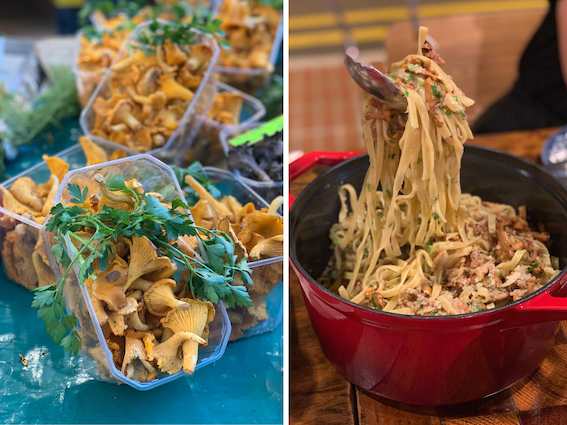
L-R: Fresh chanterelles; homecooked pasta with chanterelles -- image credit Bing Blokbergen-Leow
I have carried them back on my trips to France, and have bought them in specialty gourmet grocers in Singapore when they are in season.
They are easy to use but I would suggest to clean them well. Firstly, cut away the bottom ends (if not done already) with a paring knife, and scrape away any stubborn stains or debris along the stems. Gently brush away the surface dirt before giving them a quick rinse in cold water, and drying them thoroughly with kitchen towels or clean, absorbent dish towels.
The edges of the mushrooms are delicate and a heavy stream of water can damage them. So be careful.
Hairy Crabs, from China
I find using my hands to eat ‘troublesome’, and I don’t always make much effort to do so. But I always “get my hands dirty” for hairy crabs; that is how much I like them.
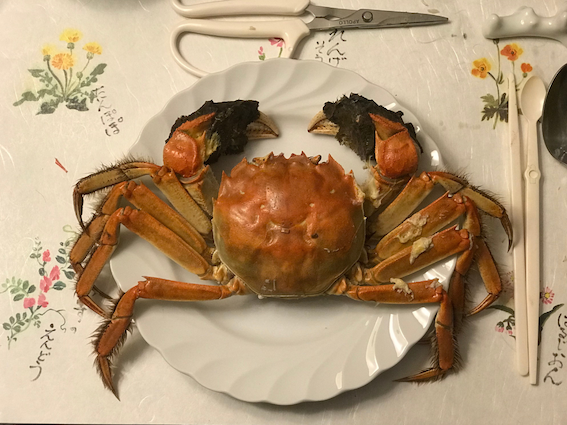
Steamed Hairy Crab - image credit Bing Blokbergen-Leow
Every year when the peak of the Chinese Autumn season comes by (around September - November), I look forward to a feast of both the ‘roe’ (or milt) of the hairy crabs and the sweet and delicate meat.
I used to bring them back from Yang Cheng Lake when my sister was living in Shanghai. Nowadays, I enjoy buying them live from Allswell Marketing in Geylang, or eating them “drunken” at Tong Xin Ru Yi Traditional Hotpot.
If I eat them at home, I steam them. I like using the steam function on my Miele steam oven for this, and have done it so often that off the top of my head, I can remember that it takes about 11 minutes for a 220 g crab and 13 minutes for a crab of 320g!
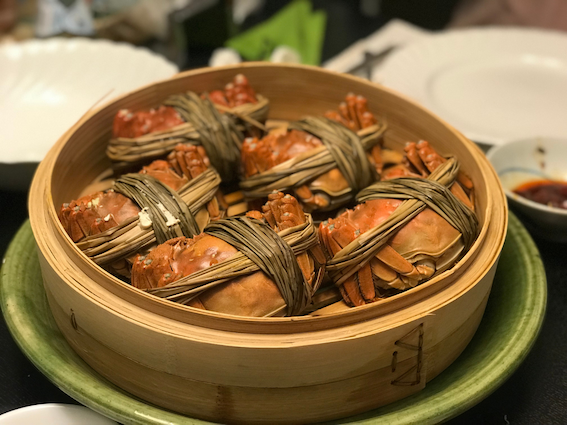
Hairy crab in bamboo steamer -- image credit Bing Blokbergen-Leow
To prepare them for cooking, I clean the crabs first with a clean toothbrush under running water, spending more time on the crab “mittens” (question to Bing: claws?). I like to serve simple side dishes with it: egg fried rice which is great with the hairy crab “roe”; a cold Northern Chinese salad with cold bean curd skin; some Chinese crawfish; as well as a hot tea of ginger and pandan leaf.
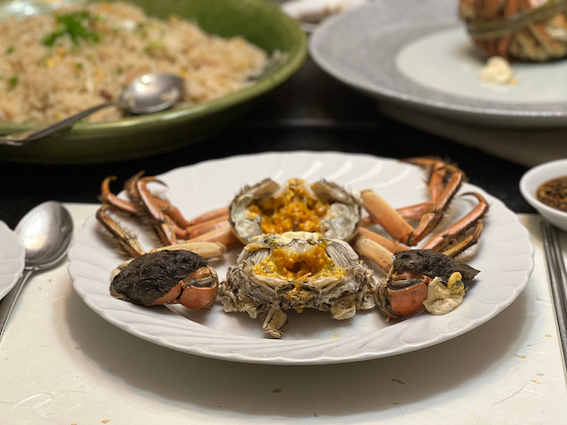
Hairy crab, shelled -- image credit Bing Blokbergen-Leow
To bring out the flavours of both the flesh and the roe, I always eat them with a specially concocted dip made with Zhejiang vinegar – my favourite Chinese-style vinegar, smooth and high quality; freshly minced ginger, and brown sugar. It takes me around 20 minutes to “decimate” a whole crab from carapace, legs, claws and body. So delicious!
************
By now, dining on these when they are at their peak have long become traditions in my household and I can’t help but look forward to them!