
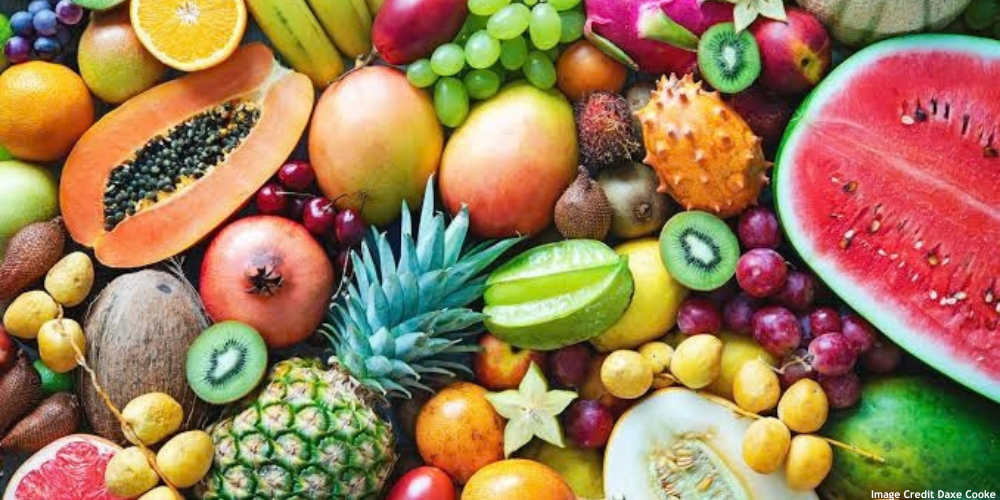
Singapore is undeniably a cosmopolitan city. We have access to so much knowledge and produce that we hadn’t had 5 or 10 years ago. But there’s still so much more out there that I wish we could know more about – and celebrate! One of the things that I often think about is how there are some ingredients that are really well-liked in their home countries but aren’t really known in Singapore – which is such a pity when they are both delicious and nutritious.
Some of this is perhaps because a lot of these ingredients are only seasonally available but Singaporeans are not immersed in the idea of seasonality since we don’t actually live through the four seasons. Furthermore, we’re able to get imports from the North and South hemisphere all year round, so we’re able to get “seasonal” produce all the time. Some produce can now be grown all-year round and, accordingly, are available anytime.
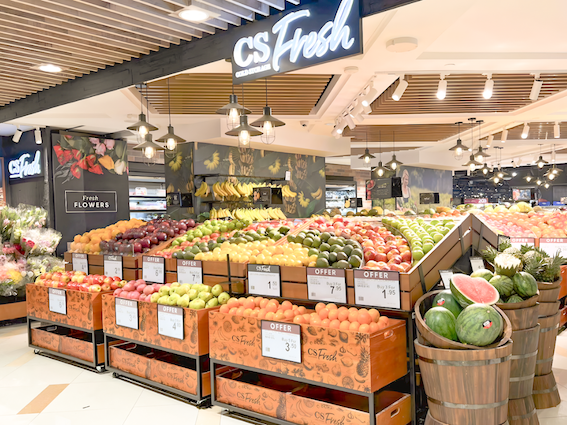
Image Credit Raffles City Marketplace
For me, this is a privilege. And it is an even greater privilege to be able to choose what we want to eat.
So I take this chance to clarify: Everyone chooses what is possible for their household.
But it would be good if you could be aware of what you buy and where you buy from. I strongly believe that following the cycles of nature benefits our health and well-being. And while I am not an environment buff, I do advocate that we should not exploit the land and seas for our own benefit.
Having made so many disclaimers, I’m ready to get to the most exciting part: sharing about the ingredients and produce that I really like! There are so many that I’ve split them into two different articles; today, I will first share about fruits that are really valued in their home countries, often considered a premium or even a luxury product – but which we mayn’t know so much about here.
FRUITS
Yang Mei (楊梅), from China
Chinese bayberries or waxberries
Yang Mei (楊梅) – also known as Chinese bayberries or waxberries – are available during late spring or early summer in the Zhejiang Province. In the days when my sister lived in Shanghai, I would get these fruits when I visit. These days, I get them from my local fruit stall on East Coast Road.
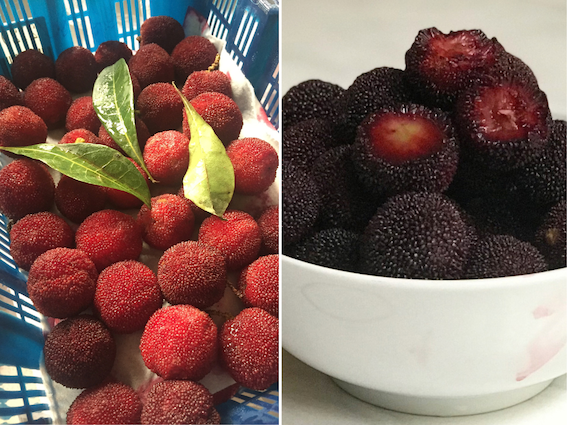
Image Credit Bing Blokbergen-Leow
They have a really interesting texture and form: what looks like a “hairy shell” or soft husk protects soft, strawberry-like flesh within and in the centre is a hard seed. This outer layer is as edible as the flesh. The fruit is sweet-tart and really lovely when eaten fresh and cold.
What some people may not know or practise is the soaking of these berries in salt water for at least 15 minutes before eating. Please do this because this dislodges the fruit worms in the “spikes”!
Sein Ta Lone mangoes, from Myanmar
My ultimate favourite mango variety! We all have our own criteria for rating mangoes, but I really like the Sein Ta Lone mangoes from Myanmar. Sein Ta Lone translates to Diamond Solitaire.
In 2015, I chanced upon them at a fruit stall at Telok Ayer and selected four when I made a purchase – out of mere habit as I always buy a few fruits home when I see some that look good. How I regretted my decision that year; how could I have bought only four! They were so good, but their season was and has always been really short. They are available only around May to June.
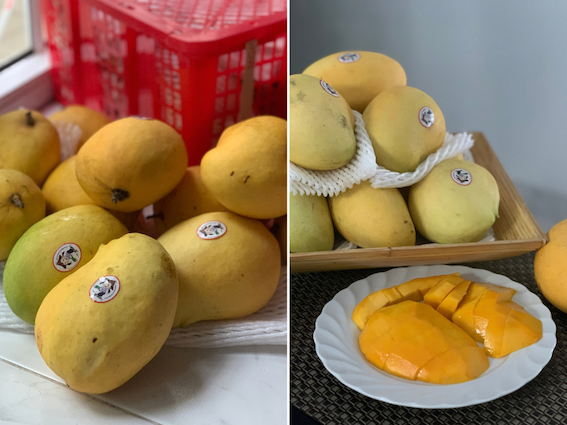
Image Credit Bing Blokbergen-Leow
Sein Ta Lone mangoes are small to medium in size, and ripen to a rich, orange colour. When they are ripe, they are really aromatic. I often describe them as having a “green” Asian mango flavour but with a much fleshier texture. A good Sein Ta Lone trumps all other mango varietals for me.
Now I buy mine from Momobud at Oxley Tower level 2. They deliver to my home, and the folks there are particular - which is good for the consumers! And if I am lucky, I get gifted by a friend’s relatives from Myanmar.
Feijoas, from the South Americas
I first tasted feijoas in Columbia; I had made a trip to Bogotá at the end of October 2018. I was so impressed by the biodiversity there and brought back a lot of different fruits I had not seen often or at all. Feijoas were one of them.
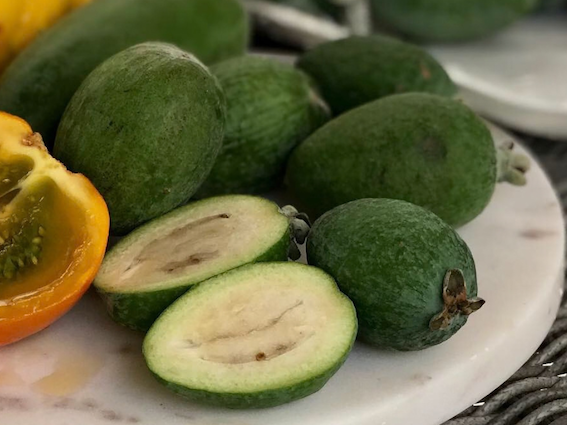
Image Credit Bing Blokbergen-Leow
They are small egg shapes and, for me, tasted like a fascinating “guava” with a sweet and tart profile – like a cross between pineapple, strawberry, and guava. I would describe the fruit as having a pronounced floral aroma: one might say, perfumed.
In the last three years, I have seen feijoas being grown and sold in Perth, Australia. There, they fruit from Autumn to early Winter (March - June). Some people call them “pineapple guavas”. Do try them the next time they come into season!
*********
I could go on and on: these are just a few of the incredible fruits that I’ve come across and wish people could know more about. Next time though, I’ll mention a few that are great savoury ingredients!