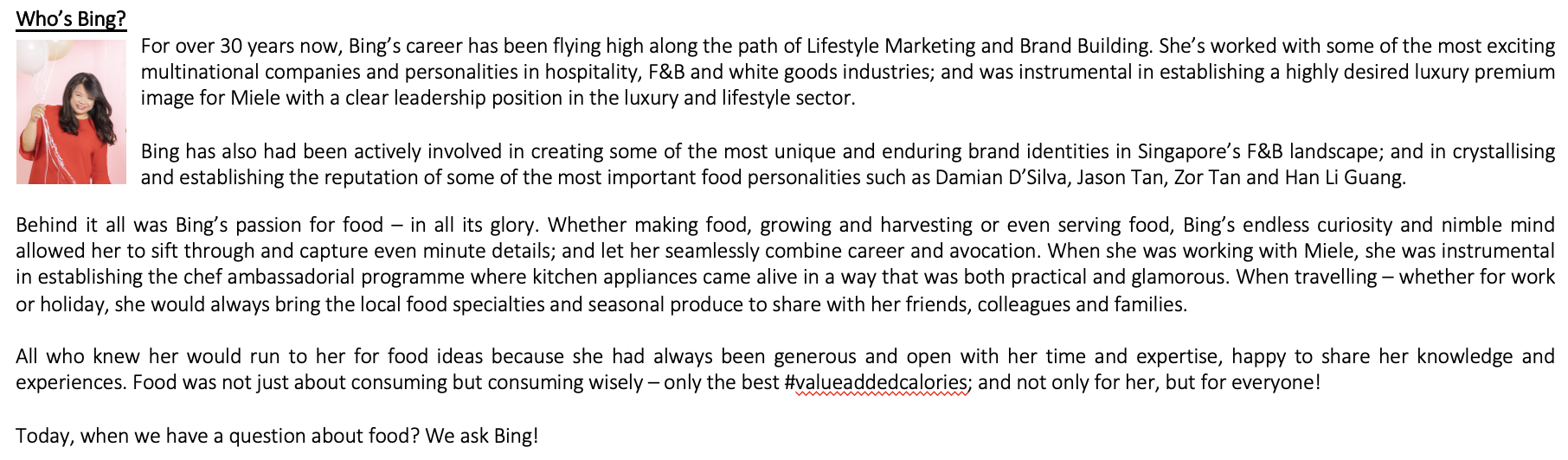
If you have a food question swirling in your head, who do you ask? Bing!
QUESTION:
In line with the approach of IWD, what are your thoughts on women and their roles and circumstances in F&B?
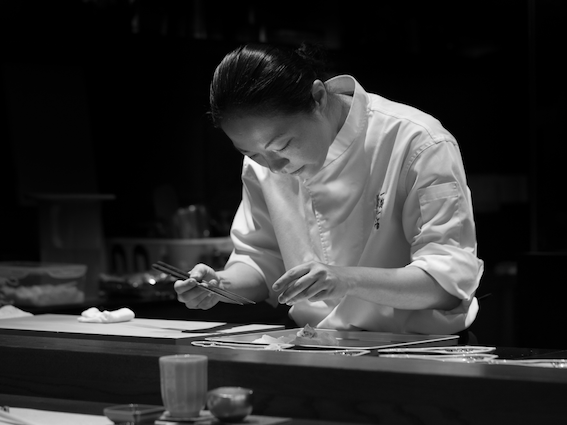
Chef Akane Eno, Ichigo Ichie
BING'S ANSWER:
As far as I can see, the current environment is still quite traditional. That is, both the general public and the industry insiders continue to have a very strong impression that home cooks are women and restaurant chefs are men.
Brief Sketch of Current Situation
To be fair, I think there are valid reasons for this. Kitchens are tough environments, physically because of the heavy workload in both the lifting and the amount to do – and also mentally. Depending on the head chef, the abuse can come verbally or, in some cases, physically too.
At home, women are still expected to be primary carers of children. So when families start planning for kids, women not only have to carry and birth the child but are also expected to look after their needs sometimes almost solo – at least, in the early part of the children’s lives.
Naturally, this makes it more difficult to work in a professional kitchen which is often much more demanding on the schedule and the physique than a regular corporate position.
I attended an overseas talk once - and a chef on the panel admitted that he may promote the male team members over the females because “females give birth”. He was booed on the spot, but sadly I think he is speaking the truth of the industry. In fact, Konstantino* tells me that globally, women on management level (sous chef and up) are paid less than men.
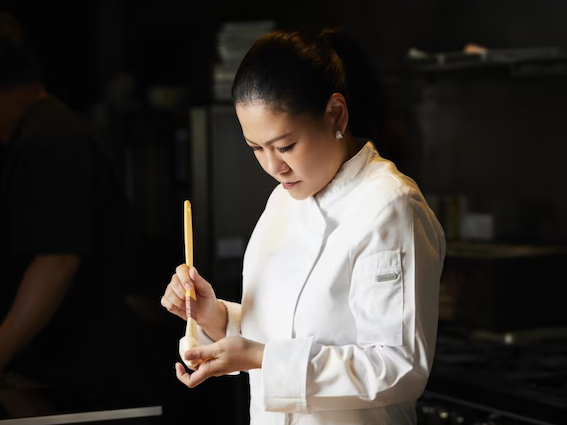
Acclaimed Filipina chef Joanne Siy
Having said that, the situation seems to have improved over time, especially with the younger generation. The younger chefs themselves often reach out to help others who may need it more.
Thoughts On Industry Evolution
I think owners of F&B establishments need to decide if they want to be more inclusive and how it could help their establishment. Women can bring different sets of values and strengths into the workplace. In the role of Brand Management, Consultancy and PR, I do see lots of women.
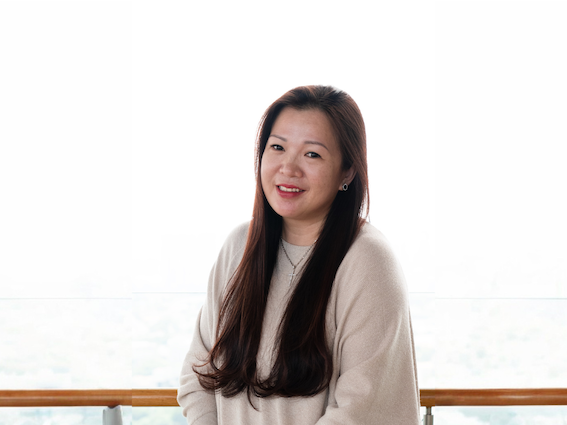
Janet Sim, International Director of Sales & Events, 1-Group
I have worked in French and German companies and did not experience much gender inequality. I like to imagine it is a mindset and attitude of “never say no” but I also assume I did not go into a typical “man’s” environment.
Sometimes I look at a place and I think there are opportunities for it to be more inclusive, but, in the end, it does depend on the restaurateur. If the establishment see values that can be added by having diversity, they must make the environment more inclusive wholeheartedly.
And, on that note, owners and other decision makers must take it upon themselves to set the examples if they want the environment to become more diverse; nobody should expect the business and the industry to evolve on its own!
Chefs, FOH staff and restaurateurs as well as key opinion leaders in the associated industries such as the food media, the marketing communicators and such must make a concerted effort to make it happen.
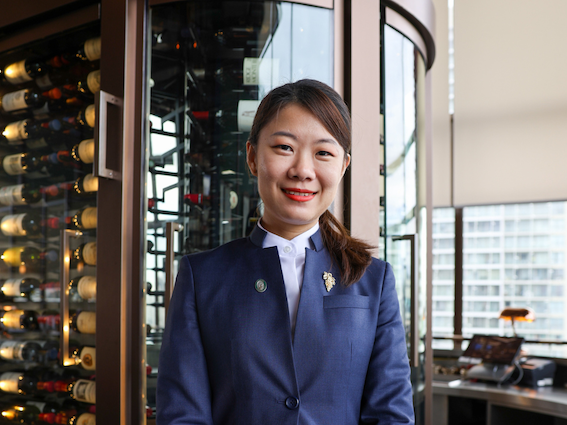
Shirley Tan, Head Sommelier, 67 Pall Mall Singapore
But What About Now?
Having said that, in the current environment, as a woman, I think it is important to understand where you are headed. I feel we should not expect others to give us the leeway if the environment is not dependent on it. These are real, practical questions we must ask ourselves.
If you feel where you are headed is sexist but you still decide to join, go with your eyes open. We are in control of ourselves and we are in a position to say no. Don’t let ourselves become victims of societal pressures.
*Ed’s Note: Konstantino refers to Konstantino Blokbergen, Bing’s husband who has worked in some of the most exciting establishments in Europe, Asia and Singapore.