ASK BING!
With National Day coming up, we can't help but think of our childhood foods that are so difficult to find now. But is there anyone who really cares about Heritage Food?
BING ANSWERS:
Everyone likes a good story, don’t you? Especially when it’s linked to something tangible or when it brings back your memories.
Think about how you were a small child, sitting on the floor with your cousins to make round Hakka Abacus Seeds and putting a dimple in the dough to flatten it.
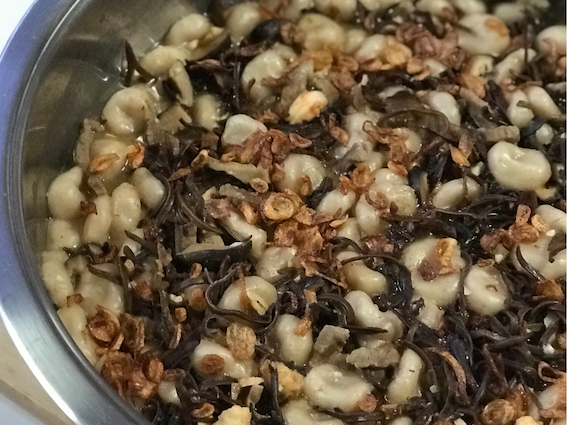
Homemade Hakka Abacus Seeds; Image Credit Bing Blokbergen-Leow
Or making Teo Chew Peng Kuehs, putting them preciously on weaved bamboo baskets, before steaming them. The dough is so pink and hot you didn’t think your hands can handle it.
I once heard someone share that he offered to be “free kitchen labour” to his Peranakan and Eurasian grandparents in order to “learn” their craft. As we know, these recipes are so sacred they are bestowed only to the deserving few.
In some kitchens, the tools and wares used are so ancient they come from a different century; oftentimes, the recipes old enough to have been passed on for several generations. Handwritten recipe books now need to be framed because the pages are coming out.
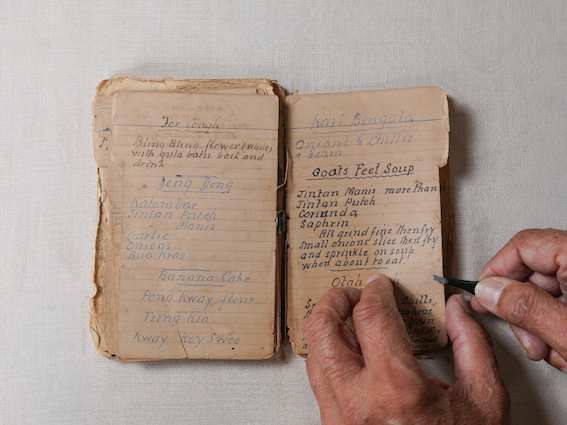
Handwritten Recipe Book by Chef Damian D'Silva's Pop; Image Credit Gilmore & Damian D'Silva
And sometimes, you might just be the last generation to enjoy these recipes because they are so tedious to make.
We all love these stories but for a restaurant that serves the recipes featured in these stories, would we go back more than one time?
Are Singaporeans “Checklisters”?
I always say that Singaporeans are “checklisters”. We have a long list of places to go - often prioritised by how long you must wait to get your seats (and your bellies filled). Many times, we go to a place once and then move on to the next on our list once our curiosity has been satisfied. It is very seldom that we return to any place after that.
This behaviour is fuelled by our culture of always seeking new places, and the low barrier to entry for new places. In 2026 (January to April - based on Straits Times and ACRA Singapore), we saw 1,436 new food businesses registered, though many also closed.
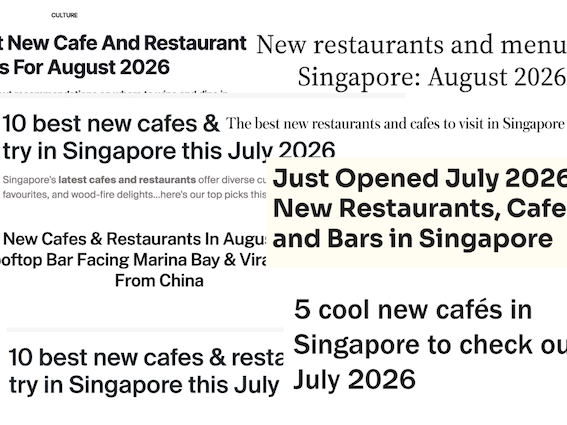
New Cafes and Restaurants Headlines; collage credit GastroSense
Currently, my social media feed is also pushing a lot of new cafes and patisseries that just opened. Basically, we are constantly hit by new entries and places you should check out.
In Singapore’s ultra-competitive F&B landscape, it is imperative for a new establishment to do well at the start and to sustain a good business after. But this is very hard to manage when our population always checks out the next place, and does not go back enough to support the “old” places even if we enjoyed the experience there very much.
Needless to say, this applies to even to the F&B concepts which are recreating the recipes and dishes of our childhood – especially when they may cost more due to the need for hard-to-seek ingredients and more labour with the more intricate recipes.
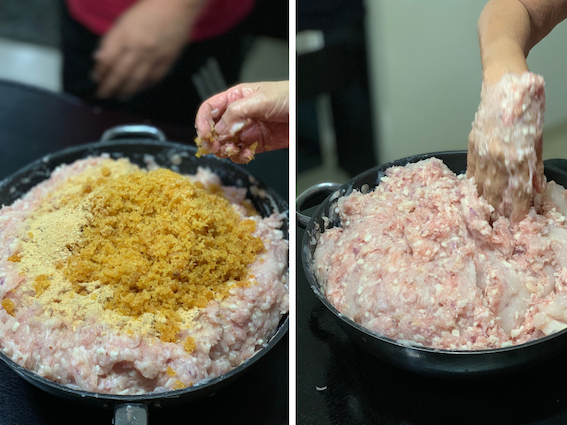
The Hand Making Process of Yong Tau Foo; Image Credit Bing Blokbergen-Leow
Would We Spend More Money On Culinary Heritage?
I ask myself this question all the time. I would, for genuine concepts that do things properly. Their actions, their use of ingredients, tools or wares are intentional. There is a reason things are done certain ways, and the chefs or owners take time to explain the in-and-outs. But how many people are like me?
Many diners do not have the privilege like I do to discern (or the experience) if a story is genuine. And some may just want to get on with their meals and their conversations.
In some cases – or many cases, the stories are often told by other people who didn’t live through the experience and are not able to champion “culture and heritage”. Listening to those team members struggle to tell the same story can be “cringy” and, if not clearly presented, can sometimes feel repetitive.
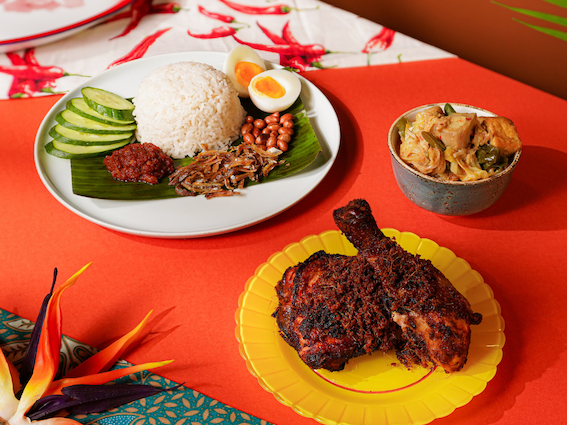
Rempapa's Nasi Lemak with Ayam Berempah; Image Credit Rempapa by Damian D'Silva
However, if you have a chance to witness a genuine champion and advocate of this cuisine, consider this:
Would you think it is fair and just that your grandma spends hours of time and painstaking labour, sharing her secret recipes for Nasi Lemak, Biryani or Hakka Yong Tau Foo that were passed down from her own grandma – and then be told all this effort and generosity is worth only $5 a plate?
Maybe the target market is getting smaller. But I feel heritage cuisine is just not for everyone.
Reality Of The F&B Industry
We also have to consider the industry in Singapore and globally.
More and more, people (especially existing operators) do not want their kids to get into the business of “serving food to others”. This is especially true in developed cities. It is the long hours and small margins. Not to mention the many “loose ends” one needs to pay attention to in the F&B industry such as getting the right food safety certifications with the SFA (Singapore Food Agency), getting the necessary approvals with the URA (Urban Redevelopment Authority) for exterior seating and the BCA (Building and Construction Authority) for fire safety.
It is unsurprising that we also see the increasing employment of foreign workers in F&B, both in service and in the kitchen. This brings us to another crucial point: generally, it is hard to expect a person who did not grow up with the flavours to cook the same way.
I have a friend who lament how their Hokkien Mee, Chye Tow Kway, Sambal or Kuehs taste so differently from when they grew up. If the cooks did not grow up eating the food, how would they know the flavours? Things that used to be done with intuition borne from decades of experience and exposure have been taken over by untrained chefs casually deconstructing flavours.
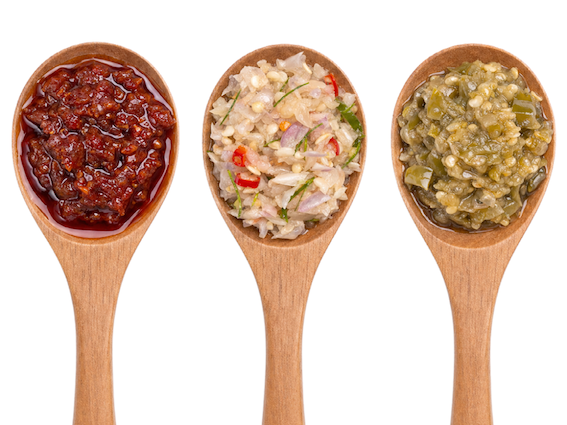
Nyonya Next Door's Sambal Trio; Image Credit Nyonya Next Door
And with so many governmental incentives for digitising of various systems, we also start to see more and more places using machines and automation to replace many – if not all – parts of the processes. In those cases, things that used to be done by intuitive hands are now done by unfeeling machines.
Perhaps the younger generation might not be as aware but for those of us who grew up eating the dishes made by folks trained bit by bit by their parents or grandparents breathing down their necks, pointing out every single mistake; by folks who trained on the job by slinging out hundreds and hundreds of plates a day, waking at 4am to work 18-hour days – we can taste the difference.
On a related note, good training is hard to come by. I remember walking away from a stall selling Hokkien Mee because they were literally going to throw noodles into an MSG stock when the proper procedure is to first fry the noodles with garlic and seafood etc.
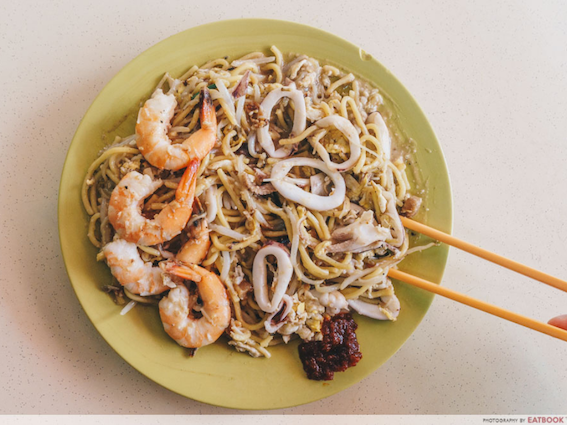
Swee Guan Hokkien Mee; Image Credit EatBook Singapore
In Singapore, the rental, ingredients and manpower costs are so high that I can understand if an operator considers these factors and finds the proposition challenging. The margins are really tight.
A Lifetime Commitment
Heritage Food needs love, passion and desire to do well. There are many detailed preparations, and every step is arduous. Many things need to be made by hand. Thanks to all this, the costs are also very heavy. With this, it is not surprising that it can take decade to master just one recipe. It is just so tough.
It is difficult in this day and age to find people who are dedicated and committed for the long term. When it comes to Heritage Cuisine which can take a lifetime to learn, the possibility is so much lower.
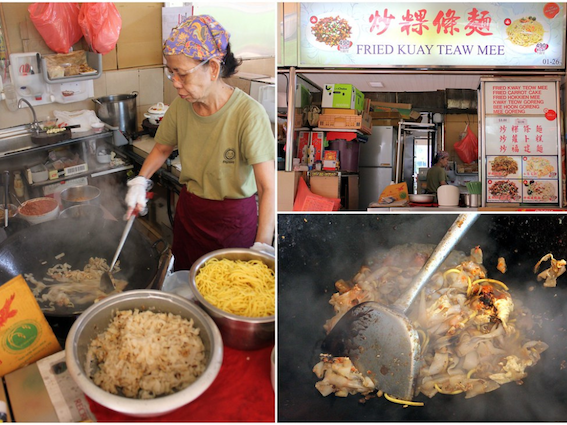
Seah Imm Fried Kway Teow Mee Collage; Image Credit MissTamChiak
Moreover, these recipes tend to carry stories that mean a lot to the person cooking the food. Because these stories are so dear, you want to cook for people who understand and appreciate the food and the stories they carry. It is a very personal journey. Not everyone can find the soul in these recipes – and be open enough to share the heart and soul of the recipe with others.
Maybe a few people will consider this business. In my lifetime, I hope they do. We will have to weed out some and keep only the ones that genuinely want to pass on this tradition. But I think it is a calling with a purpose. It is hard work, and lonely at times.
If you come across chefs and operators who genuinely want to tell the story, hold on to them as much as you can. And support by going to their concepts often, not only one time.
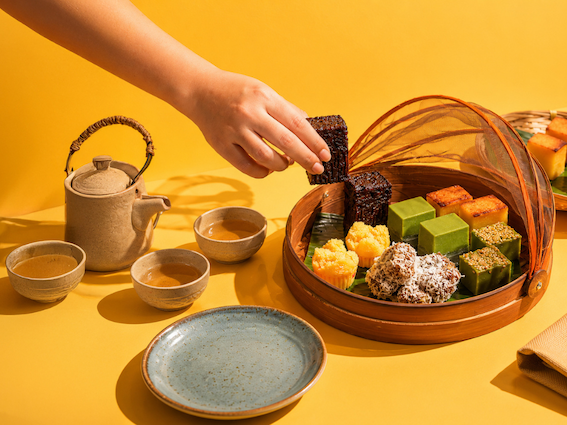
Rempapa's Heritage Kuehs; Image Credit Rempapa by Damian D'Silva
Like I said, it is really hard work. It takes passion, craft, desire and determination. And hard-earned knowledge.