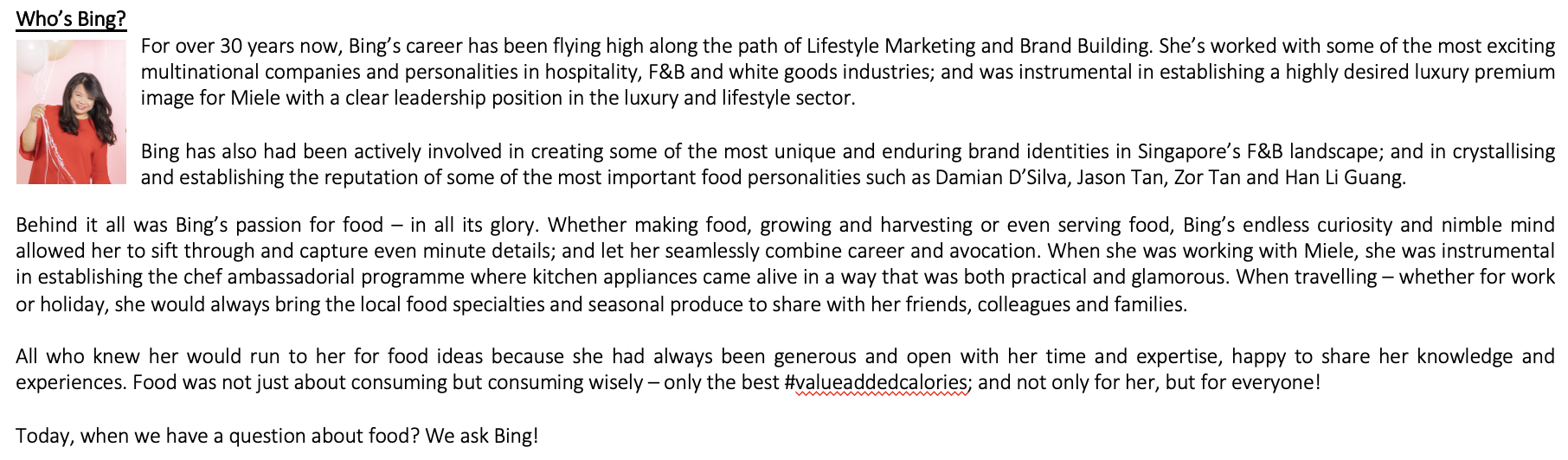

If you have a food question swirling in your head, who do you ask? Bing!
QUESTION
With the approach of the end of year and the start of a new one, perhaps we can ask you something a little more serious: What is PR? What is its role?
And on that note, would you share some misconceptions you often encounter? Has the changing media landscape changed the purpose and value of PR?
BING'S ANSWER
A note: GastroSense focuses on clients from F&B industries with a few from the lifestyle and hospitality sector, so my answer will lean towards our experience in those.
The Ideal
There are objective answers but I think this is not what you’re coming to me for; you would have Googled or asked ChatGPT for those! So let me share my personal ideal:
It’s about sharing the deepest stories behind the company, their products and their services – their origins, their values, their experiences.
By doing so, we build a reputation for the brand that reflects their stories and their care for the customer, the products, the services.
I suppose if we convert it to business terms, it’s about brand building, about creating positive brand awareness and top-of-mind recall for business longevity.
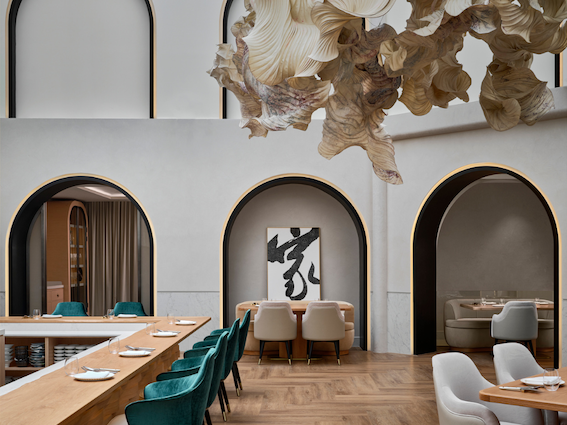
Restaurant Born - main dining space
Brand Building
But this brand building part is the part that some clients just don’t see.
What most restaurants are used to – whether they are launching a new concept, outlet or menu – is sending out a press release and then getting media through to experience the offerings.
While these can be part of the brand strategy, these also need to be carefully planned to align with the brand’s own values.
Every touchpoint and collateral should tell the brand story and share the brand messages in a way that is clear, accurate and impactful.
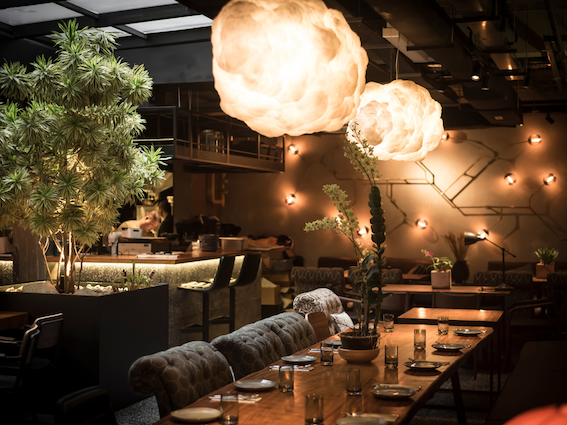
Birds Of A Feather - main dining space (showcase trees, clouds and "branches"
In an ideal situation, the invited guests who’ve enjoyed the experience will talk, write and post about the brand – what we usually just call “buzz”. This then leads to more curiosity about the brand and more exploration, more customers, and more revenue.
This is a process that can take time; though, with social media in the picture, can and has been much quicker than before.
The Gray Line
However, because there is this result, many clients start relying on PR to do the work of sales and marketing.
One might even say that they over-rely on PR, thinking of it as a “silver bullet” to bring in customers and revenue. Some clients might even think this is the most important or only part of what PR does. But I can say with certainty that this is not the case.
Actually, in the old days, this is what we called the “gray line”: bringing people to experience the brand concept, its services and offerings is actually a marketing exercise. PR can and often does break through this gray line, especially when the restaurant is new in order to encourage buzz through word of mouth, written articles and social media posts.
Essentially, PR brings the right people through so that they can talk about the brand.

Image credit Konsorcjum Izb
The “Right People”: Evolving Media Landscape
And who are the “right people”? This touches a little on the evolving media landscape and some misconceptions.
I made a mention earlier of having social media in the picture. Basically, social media has dramatically changed consumption patterns and businesses naturally must align themselves with these changes when planning their communications strategy.
Using the earlier example of inviting media when launching a new concept, outlet or menu, many clients nowadays have a strong preference for inviting social media influencers (SMIs) and key opinion leaders (KOLs) – quite understandably so. Anecdotally, many clients have seen a sharp increase in sales when popular SMIs and relevant KOLs rave about them on their platforms.

Image credit bria.com.ph
But, in my opinion, clients should continue to include mainstream media as well. Their platforms still play a huge role in brand building because their stories and interviews also share brand stories and values on a larger and deeper magnitude. These, in turn, reflect the brand story and values more distinctly, offering a huge advantage to ensuring brand and business longevity.
Make It Easy For Media
Our job as PR is to make it easy for all media to “get” the brand story: to become aware of the origins, offerings and experience, and to understand the brand values; and – consequently – deepen positive impressions of the brand and encourage them to talk, write and post about the brand.
On Time
This is one of the most important and underrated principles: sharing information with media “on time”. What this means is that we try our best to understand the different media publication schedules and ensure information reaches the media at a time when it’s most inspirational.
Image credit myslide.net
For example, we discover that certain periodicals publish F&B stories at the start of the month. Then we find out that they decide which story to publish a few weeks before.
We naturally make sure we follow this timeline so that the writers receive confirmed and accurate information at a time when they’re most likely to need it.
Hosting
When we invite media to an experience such as a tasting, there is the question of whether a PR person should host or not.
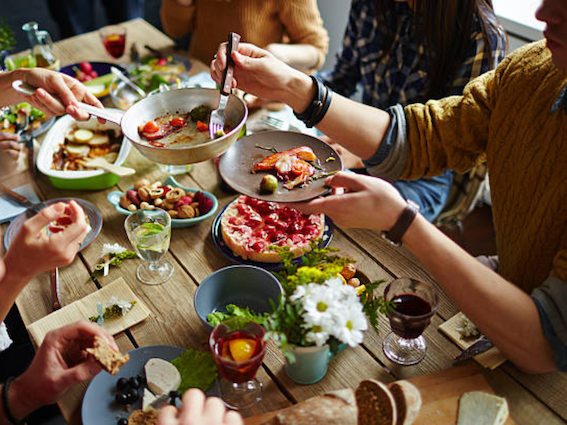
Image credit Shironosov, Getty Images via iStock Photo
Media that have been in the industry for a long time will always expect the PR person to be physically present.
They want the PR person to share not only the highlights of the experience and the brand but also the side stories, the little anecdotes that may not have made it into the press release itself but adds colour and new layers of meaning to the brand story.
Not only is this a way for them to see the story through a different perspective, this also allows them to receive immediate responses to their questions and find fresh angles for potential articles and interviews.
Digestible Nuggets of Information
But we’ve also noticed that as social media becomes a more trusted source of information, more and more media persons have started prioritising these platforms. During tastings, they don’t have the headspace to focus on the experience and the information shared by the host because they need to create real-time updates for Instagram etc.
To address such situations, we’ve started creating quick FAQs for media use. This is different from the usual fact sheet detailing things like the address and operating hours. When we say FAQ, we really mean pulling together small bits of information in a format that is conducive to easy comprehension and easy copy-paste. Media can easily use these FAQs for IG stories, Tiktok updates or even FB stories.
This also applies to the situations where media can’t or don’t wish to be hosted. They visit the restaurant on their own or with a guest. Oftentimes, they don’t have the opportunity to read the press release or skim through it very briefly so they seldom have a full understanding of their experience.
We greatly encourage media to use the FAQs whether to ensure they’ve at least a quick clear understanding of their upcoming experience or to use as easy copy-paste text for social media posts and stories.

Image credit Path Digital Solutions
Using the prepared FAQs in this way means you can be sure the information is both succinct and accurate. It’s a win-win situation for both the brand and the media.
For this reason, it’s even better if the PR team can ensure that the FAQ’s writing style is also impactful.
Frequency of Press Releases
And speaking of impactful, this is also something to consider when planning the communications calendar.
Some clients insist on sending frequent updates via releases and alerts. Others prefer to disseminate press releases and alerts only when they feel there is meaningful news to share.
Our own stance is that if there are important updates, something that helps with emphasising brand values and messages, something that makes an impact to your brand or the industry, then the brand and their PR team should go ahead and share it even if it happens monthly!
Having said that, it’s quite unlikely such significant situations would happen at such a high frequency. And sending out press releases so often, for minor events and news, can and will cause media fatigue.
Not all press releases are helpful. I always advise the client to save media interest for something of greater moment, that will leave a deeper impression and is more helpful to building their name.

Image credit www.freepik.com
Best Time To Start PR
For us, it’s always best to start PR and communications at the start, especially in today’s context where anyone can easily post about an opening on social media – easily turning a new restaurant into old news.
What this means is that all communications of the brand story and messages are accurate right from the beginning (or "at the start); this also means that brand building is precise right at the start. However, “the start” will mean different things to different groups of people.
When we say “the start”, what we mean is when the brand is starting to reach out to their target consumers. For some brands, this is when the restaurant venue opens its doors to paying guests; for others, this is even before they’ve even named their restaurants – because the client wants PR assistance in putting together the brand story so that it is both cogent and compelling even while it showcases the best of the brand.
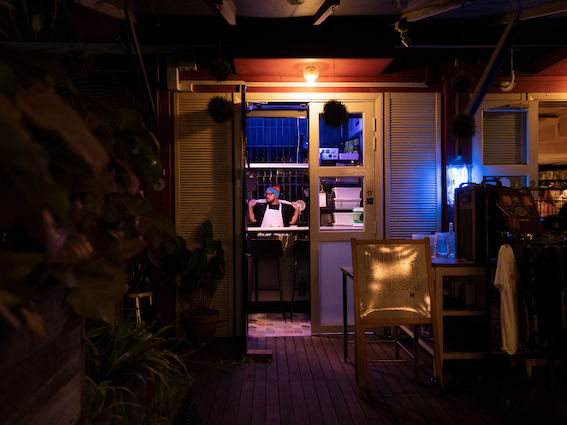
First venue of Small's
That being said, some brands skip the launch and reach out to the PR agencies later, sometimes as much as 6 to 12 months later. For such clients, sometimes it’s about concretising their messages; sometimes, about clarifying mixed messages; and sometimes, simply re-aligning.
PR work can be successful for such clients but does require a different approach to communications and messaging.
Customised Approach
When deciding to reach out to a PR agency, brand owners should always be very honest and upfront about their current obstacles and the results they want to achieve.
I can’t speak for other companies, but at GastroSense, whether we work with a brand from the start or later in their journey, it’s important to tailor the strategy and approach to each brand’s situation and final goals in the same way that we tailor the type of information we share to each media and the platform they represent.
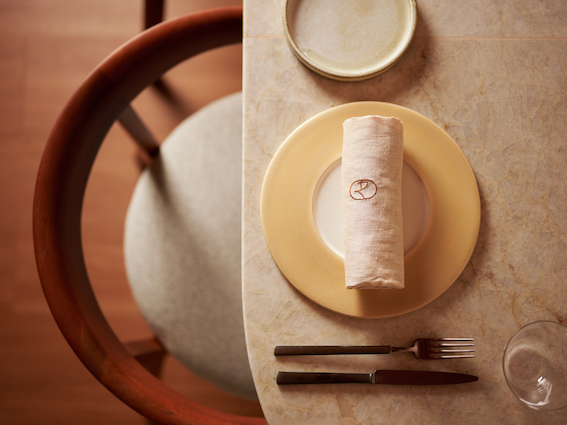
Shigaraki ware in AMI Patisserie's Tsudoi Dining Room
So if the brand owners beat around the bush or equivocate about their worries and their desired results, any advice and counsel wouldn’t get to the heart of their concerns.
In short, the solutions we give to both our client and to the media are what works best for them.
The GastroSense Team Member
This applies to our team members, too. Because our business focus is so overt, we hire quite carefully so that each person has real passion for what they do.
For instance, we try to find people with an affinity for food, who like people and who love stories – discovering them, telling them.

Image credit joriwhitepr.co.uk
Having these qualities not only benefit the clients, but also benefit the candidate because it means they would love their work.
Again, it’s a win-win situation for everyone!