

The year-end is a time of reflection for everyone, but especially so this year for chefs and restaurateurs, many of whom have openly mentioned in both broadsheets, business and lifestyle periodicals that this has been one of their most difficult years.
The F&B industry has, in fact, been visibly struggling for some years now; but in 2025, a spate of unexpected closures rocked the island, the most shocking of which were long-established heritage icons and Michelin-starred fine dining restaurants. In the recently released economic report by the Ministry of Trade & Industry, F&B was one of just two industries that shrank – by a disconcerting 1.2%; despite continuous news of new openings both by independent operators and international conglomerates.
Naturally, chefs and restaurateurs have a lot on their minds. Some of our clients – leaders of their own operations and, ofttimes, in the industry – generously share with us their greatest challenges and what they’ve learnt this year. Here are some excerpts!
Hear from:
- Chef Bjorn Shen of Artichoke and Small’s
- Chef Damian D’Silva of Gilmore & Damian D’Silva, and Rempapa
- Chef Makoto Arami of AMI Patisserie
- Vadim Korob of Food Concepts Group (54O Steakhouse, Altro Zafferano and Griglia)
- Chef Zor Tan of Restaurant Born
*Listed in alphabetical order of chefs’ first name
Note:
These excerpts may be used for an article, with appropriate credit. If you require portraits and/or restaurant images, please click on the sub-headers which will be hyperlinked to the relevant pages for perusing and downloading these.
Outside of these excerpts, they’ve generously shared more. Should you wish to see all of what they’ve said for an article, we’d be happy to share. Again, don’t hesitate to get in touch.
Alternatively, we’re happy to arrange interviews if you wish to speak to them personally.
***
BJORN SHEN, CHEF-OWNER, ARTICHOKE, and SMALL’S
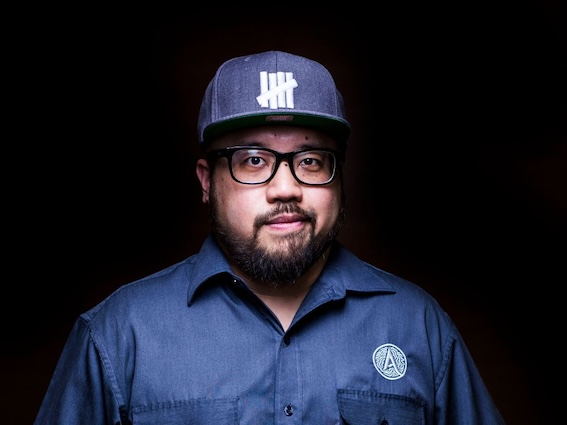
Greatest Challenge and Learnings for His Restaurants in 2025
As a restaurant that’s approaching its 16th year, the biggest personal challenge has been maintaining a consistent delivery of product and service. At this age, the food is important — but the people are everything.
Consistency becomes incredibly difficult when your core product is so deeply human, yet your humans are constantly changing. Training helps, but training alone doesn’t solve a human problem. What really moves the needle is operational awareness — having the stamina to manage each person differently, the patience to understand their motivations, and the discipline to keep the culture steady even when the personnel keeps shifting.
Longevity brings its own challenges. The older the restaurant, the harder you have to work to keep consistency alive — because the natural entropy of human teams only grows over time. You can’t rely on past stability. You have to keep earning it.
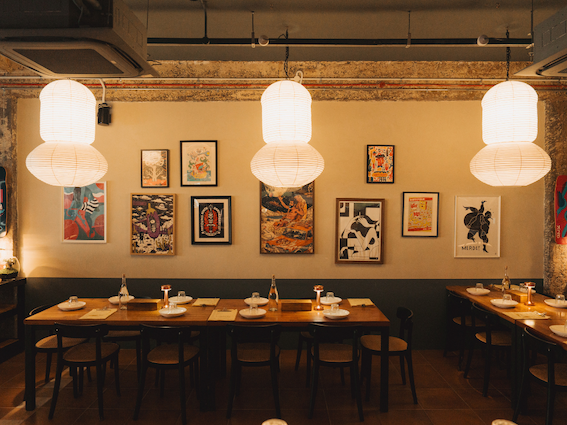
Artichoke at New Bahru
Greatest Challenge for the F&B Industry in General
I agree with the softening of consumer spending and the squeeze on the middle — that’s real and ongoing. But there’s another major pressure that deserves attention:
Local businesses simply don’t have the war chest to go toe-to-toe with foreign-backed entrants who come in with immense loss budgets and long-term market-share strategies. We’ve seen it before with companies like Deliveroo in the early days — deep pockets, aggressive burn, and a willingness to lose millions just to dominate the space.
Today, the same dynamic is emerging in dining. Some foreign brands enter with massive budgets that allow them to present value that looks incredible to the consumer. But it’s not real value — it’s a loss-leader strategy. The danger is that consumers start believing food “should” cost that little, or that quality “can” be that cheap. That perception mismatch hurts local operators who run real P&Ls with no burn budget.
And nobody is to blame here — not the government, not the consumer. It’s simply the reality of an open, free market.
We can’t fight the war-chest battle. What we can do — and what we must continue doing — is deepen our ties to community, tell our stories, and reinforce the value of local, independent businesses. That is our long-term advantage.
DAMIAN D’SILVA, CHEF-OWNER, GILMORE & DAMIAN D’SILVA
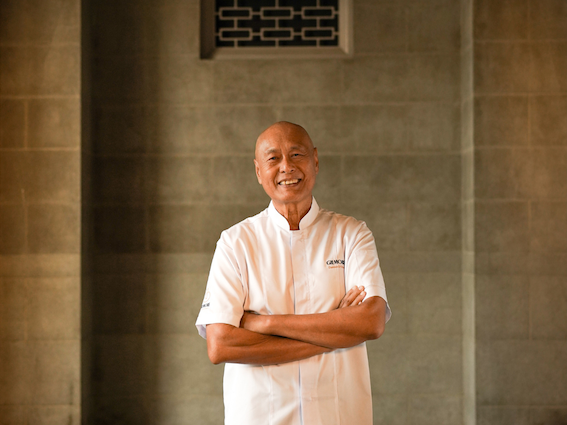
Greatest Challenge and Learnings for His Restaurants in 2025
The greatest challenge was managing the slowdown in customers, which I believe affected not only us but a big percentage of the industry. We believe there were 2 reasons for this:
- the influx of restaurants since 2022, allowing for more choices within a small city, and
- the low cost of air travel allowing Singaporeans to dine economically on their travels.
It would take time to overcome this situation as it's impossible to see an end to this, with the Singapore dollar gaining strength.
As a heritage restaurant, we do not follow trends. We believe strongly in what we have achieved and we will persevere in communicating our values to our guests, so that they understand our cuisine and purpose.

Reception area of Gilmore & Damian D'Silva
Greatest Challenge for the F&B Industry in General
Every year, more restaurants open, then close. The attraction to start a restaurant is bizarre. Some do it even when they know it's going to fail; the odds are 5 in every 100.
In the F&B business especially in Singapore, challenges are something you fight with on a daily basis. The best solution is to be proactive and try and understand your customers by communicating with them when they visit. Marketing also plays a big part in the business and requires progression.
In more practical terms, the most important aspect in starting a restaurant, I believe, is to ensure the location you choose allows for your price point and accommodate the cuisine you offer. Also, in today’s marketplace, tourists do a play a part in daily sales. Catering needs to be considered for extra revenue.
MAKOTO ARAMI, RESIDENT CHEF, AMI PATISSERIE
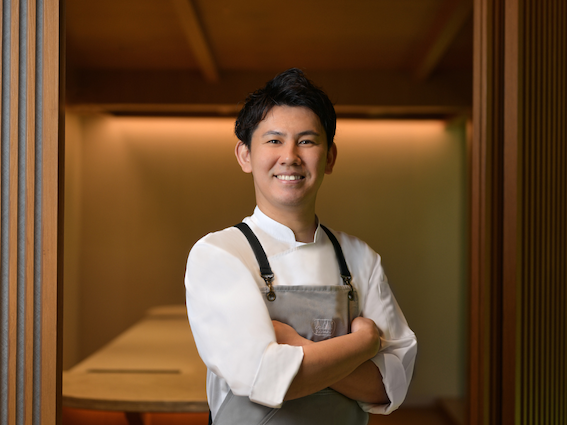
Greatest Challenge and Learnings for His Restaurants in 2025
2025 was an incredible and very unexpected year for us. Being recognised by platforms such as Tatler and La Liste was a huge milestone, and it suddenly put AMI Patisserie on the map not just in Singapore but across Asia and the world. The biggest challenge was managing this rapid rise in visibility while still maintaining our product quality and guest experience, especially with ongoing manpower issues.
As demand grew, finding and training people we could truly trust, keeping team morale high, and ensuring every guest still felt personally cared for – all of this became much more difficult when the shop was very busy and we were also receiving more event and collaboration requests.
With limited manpower, it becomes harder to deliver consistently at that high level. When the team is stretched, even small gaps – like service feeling rushed, or not being fully present for each guest – can feel very big.
Overcoming this was about pushing myself every day while staying positive and grateful. Of course, there were moments when I felt emotional or frustrated, but I tried to always come back to appreciation – for my team, for my boss, and for our customers. It was important to communicate and have patience with the team. I had to learn how to speak differently to each person, to understand their skills, their situations, and their way of thinking.
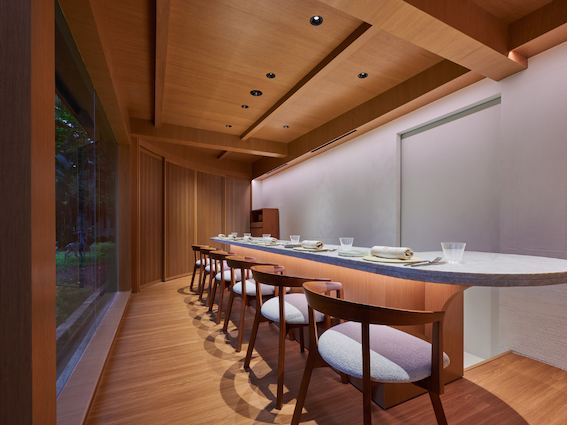
Tsudoi Dining Room at AMI Patisserie
Greatest Challenge for the F&B Industry in General
Manpower and labour costs remain the biggest challenges. It is possible to hire people, but it is very difficult to find team members – whether in service or in the kitchen – who are truly passionate and willing to grow with the restaurant. At the same time, ingredient costs keep rising, so operators have to be extremely careful in managing costs while still maintaining quality and making a profit.
On the customer side, the audience is also evolving. We see more Chinese tourists, students, and Chinese residents living here discovering places through platforms like Xiaohongshu, and this has been good for us. Our main base is still local guests, and now we are also seeing more Japanese guests than when we first opened. Understanding and balancing these different customer groups is another ongoing challenge.
This year we saw many restaurants closing, even as new ones opened – so there is always this cycle of good and bad news. For many of us, the only choice is to keep trying our best, to push ourselves and to never give up.
The F&B scene changes very quickly, so we have to keep reading the market and adjusting – sometimes even small changes can make a big difference. Speed is very important. The places that will survive are those that can adapt quickly while still staying true to their identity and taking care of their people.
VADIM KOROB, MANAGING DIRECTOR, FOOD CONCEPTS GROUP (54O STEAKHOUSE, ALTRO ZAFFERANO, GRIGLIA)
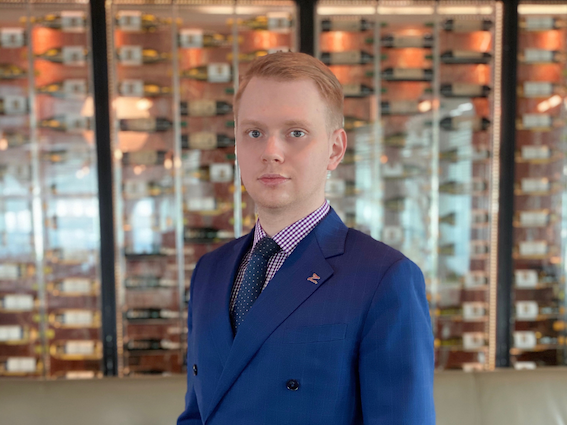
Greatest Challenge and Learnings for His Restaurants in 2025
The major challenges faced were reflective of broader F&B industry trends, particularly a persistent lack of qualified manpower and rising salary expectations. These were closely tied to shifting guest behaviours.
Restaurants thrived during the Covid restrictions due to high disposable income and inability of residents to travel while from 2023 onwards, the trend shifted. The appeal of fine dining vanished, as guests began to seek out casual restaurants serving simple, high-quality food. Dining frequency dropped and spending reduced, amplifying challenges with manpower, rental, and produce costs.
For us, staying proactive and responsive proved to be the best approach. Griglia was conceptualized as an accessible, casual venue, so the shifts in guests’ behaviour had minimal impact. For Altro Zafferano which focused on contemporary Italian cuisine, the changing landscape was a big threat. In response, we decided in early 2024 to simplify our offerings, making menus more understandable, affordable, and dedicated to produce all dishes exceptionally well. This helped to align our product with evolving market expectations.
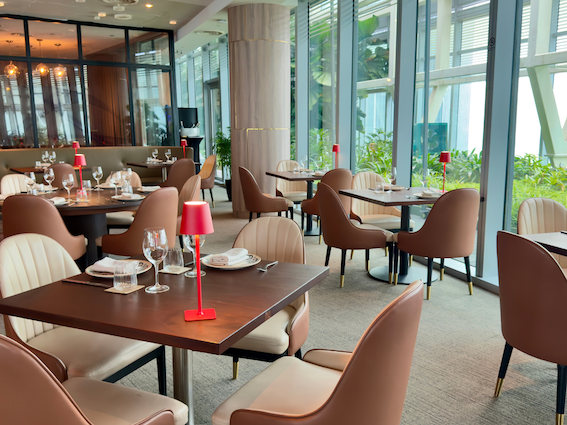
Main dining room of Altro Zafferano
Greatest Challenge for the F&B Industry in General
Rising operating costs against shrinking demand, combined with increasingly cautious public attitudes toward dining out expenditure, represented the greatest challenge. Higher prices for labour, rental, and ingredients, along with lower guest frequency, pressured margins across the industry. Multiple fine dining and Michelin starred bankruptcies, and the rise of casual formats are clear indicators of how businesses are reacting to demand and cost pressures.
However, without meaningful government support for the manpower needs, businesses can only partially adapt. Additional measures, such as regulatory reform, collaborative supplier relationships, and further digital transformation, are needed for long-term stability.
Maintaining agility is vital in Singapore’s competitive and turbulent F&B environment. Restaurateurs must stay alert, monitor market trends, understand consumer behaviour, constantly analyse performance, and actively listen to feedback. Recognising change early and responding quickly is crucial for survival.
ZOR TAN, CHEF-OWNER, BORN RESTAURANT
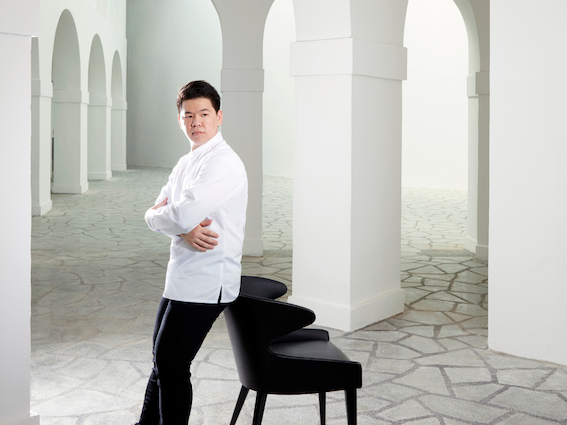
Greatest Challenge and Learnings for His Restaurants in 2025
Looking back at 2025, the biggest challenge for Restaurant Born has been manpower. Turnover has been quite high this year, both in the kitchen and front of house, and it has not been easy to keep a stable team.
It’s not that they lack passion – many of them do. But today’s generation also wants to see more of the world, experience different kitchens, and learn from other chefs. They don’t necessarily want to stay in one restaurant for a long time.
When we started our careers, we stayed in one place, waited to be promoted, and worked our way up. The patience and expectations were different. I realised I cannot always fully understand or control what they are thinking or planning for their future. Now, I’ve learned to adjust my mindset and accept that the new generation has a different way of building their careers.
From our side, we provide what we can – fair salaries, incentives, and a good working environment. But at the end of the day, it also comes down to the individual mindset: whether they want to continue growing with our establishment or move on. Our role is to support and develop them while they are with us.
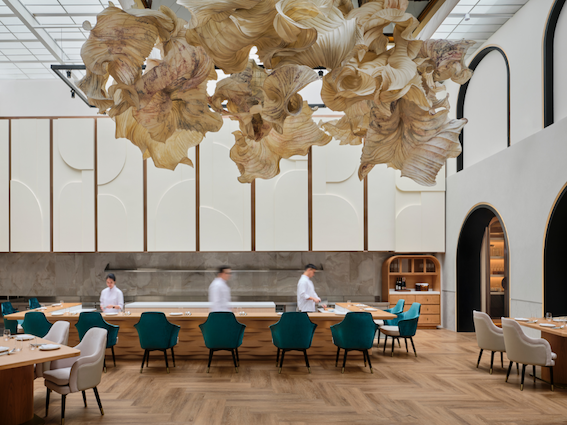
Main dining room of Restaurant Born
Greatest Challenge for the F&B Industry in General
I don’t think it has been an easy year for restaurants. Some are doing well, some are struggling, and quite a number have closed – overall it feels more challenging than last year. People still dine out, but they have many choices, and pricing plays a big role.
We need to constantly improve the quality of both service and food, and upgrade ourselves as chefs and operators. It’s about what we can provide to make the entire dining experience worthwhile for our guests.
If we can deliver a memorable, meaningful experience, we have a better chance of retaining local diners and building a loyal base, even in a difficult environment.
***
These made us think – and we hope it’s been the same for you!