
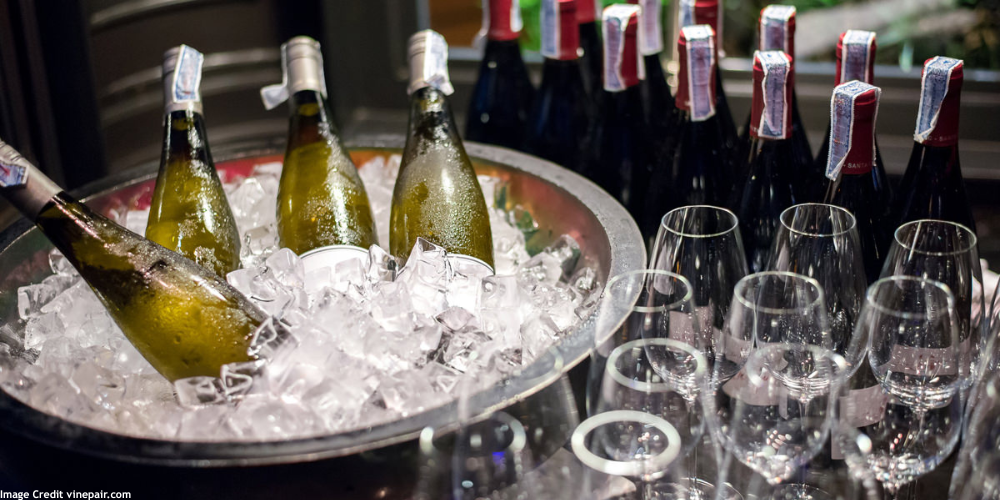
Imagine this: someone swirls their wine, tastes it – then tosses a couple of ice cubes into their glass. The reaction by anyone who pretends to know even a little about wine? Horror – expressed more subtly as a quiet wince or a raised brow; sometimes more dramatically by the widening of eyes and a pointed remark about respect for the craft.

Image Credit Petrenkod/iStock
Yet some people just shrug and toss the ice in anyway. And there’re more and more of “some people”.
Who’s right? The answer mayn’t be as cut and dried as we thought.
PS: If you've been inspired, the quotes of each brand may be freely taken for use with appropriate credit. The first mention of each brand is hyperlinked to a press kit that includes some hi-res images for use and the full quote. These links are in red.
PS2: Other statistics, quotes and notes are also hyperlinked to their sources. These links are in blue.
************
NAY – THE TRADITIONAL PERSPECTIVE
Wine is one of the most loved, and also one of the most labour-intensive beverages in the world. From the careful tending of a vineyard through harvest, fermentation, barrel ageing and bottling, a winemaker makes thousands of small decisions — each one intended to land the wine in the glass at precisely the right moment, precisely the right temperature, expressing precisely the character they set out to create.
Ice, in a single move, undoes much of that effort.
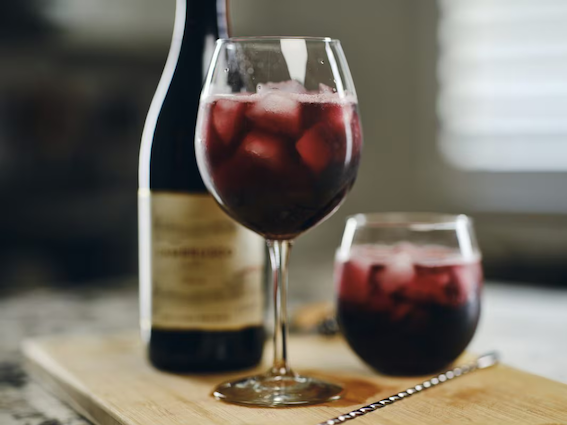
Image Credit O2O Creative via iStock
The Dilution Problem
The most immediate and most significant objection to ice in wine is dilution. As ice melts — and it begins melting the moment it enters a room-temperature glass — it introduces water directly into the wine. Immediately, everything changes.
In a 2017 article in Vogue, Roni Ginach, then-sommelier at celebrated Santa Monican restaurant Michael’s – believed to be the restaurant that brought “farm to table” to California – mentions that dilution can render wine “unrecognisable”.
Water changes the texture, the weight, the aromatic profile, and the balance of a wine. Tannins soften unevenly. Acidity is altered. The finish shortens. Flavours that took a winemaker years to coax into being are quietly washed away, cube by cube.
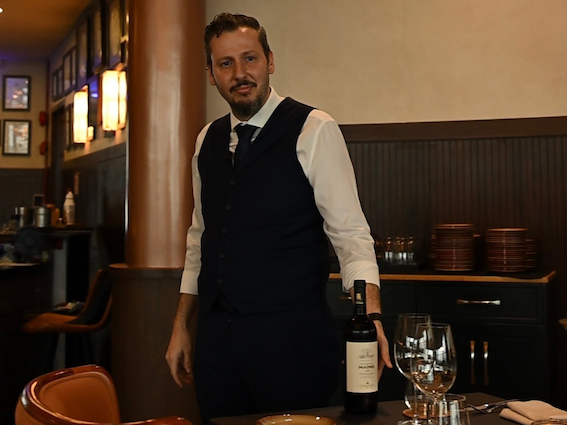
Davide Carella, Portrait Credit 1-Group
Davide Carella, Operations Manager from 1-Group, is unambiguous on the point:
“Traditionally, we don't add ice to wine because it dilutes it and changes the balance and aromas. The proper way is to serve wine at the correct temperature. The ice also changes the profile of the drink if you change the type of ice, because the dilution is different.”
The Overcooling Risk
Dilution is not the only peril with ice. Ice can also drive a wine's temperature well below the range at which it expresses its best character.
Most white wines are ideally served between 8°C and 12°C; most rosés between 7°C and 10°C. Over-chilling suppresses aromatics — the volatile compounds responsible for a wine's nose — and numbs the palate's ability to detect flavour nuance.
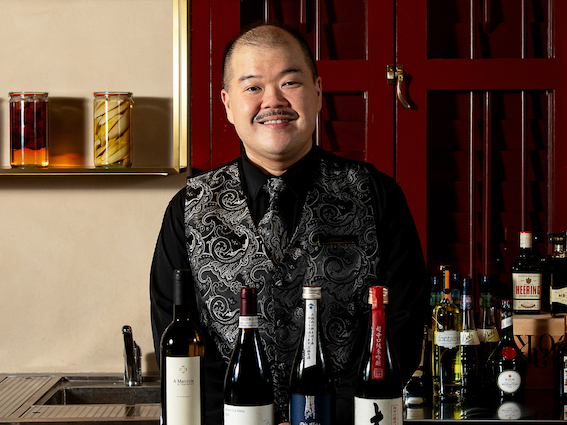
Vincent Kwong, Portrait Credit Loca Niru
Vincent Kwong, Sommelier at Loca Niru, notes precisely this risk:
“Excessive amounts of ice might overchill the wine, which might numb some of the aroma and flavours.”
Traditional wine etiquette, then, says no to ice — not out of snobbery, or not always anyway! But because the alternatives (an ice bucket, a chilled glass, a properly tempered cellar) do the job without collateral damage.
Panneer Soundarajan, Group Sommelier at Food Concepts (Altro Zafferano, 54° Steakhouse, Griglia), notes most professionals’ position plainly:
“Personally, I would not recommend adding ice to wine, as it can dilute and alter the wine's intended flavour profile and structure.”

Panneer Soundarajan; Portrait Credit Food Concepts Group (Altro Zafferano, 54O Steakhouse, Griglia)
HOWEVER! – THE CASE FOR YEA
Despite or perhaps because of everything mentioned above, the reality is that more and more people, especially those of a younger generation less inclined to defer to tradition, approach wine very differently. Particularly when they’re in warm climates and casual settings!
Context, Context, Context – The South Of France Precedent
In the sunny French regions of Provence and the Côte d’Azur, glasses of ice-chilled rosés are a familiar sight on the tables of cafés, bistros and brasseries. They’re not faux pas, but the taste of summer; to the Southern French, a custom that is already several decades old known as “piscine”.

Iced Rose Wine - a la piscine; Image Credit Anna Ivanova/Alamy Stock via Decanter
What this shows? Context matters. When the weather is hot and the wine warms faster than it’s being consumed, a handful of ice cubes add to the pleasure of the drinking experience – even if it’s unorthodox.
Vincent Kwong agrees that circumstances should govern the decision:
“If the drinker is relaxing on the beach under lovely sunshine, I think we should not make life so difficult in this case.”
Curiouser And Curiouser – A Younger Generation of Drinkers
The younger generation approach most things with interest and an exploratory attitude rather than reverence. For them, the traditions that govern wine service – glass, temperature, order – are guidelines, not rules. For them, the experience and how they enjoy it is paramount; so if ice in wine heightens their enjoyment, so be it.
One school of thought attributes this attitude to how traditional and, more recently, social media has democratised esoteric knowledge through unfiltered access to data and information usually available only to those with certain levels of social and financial capital.
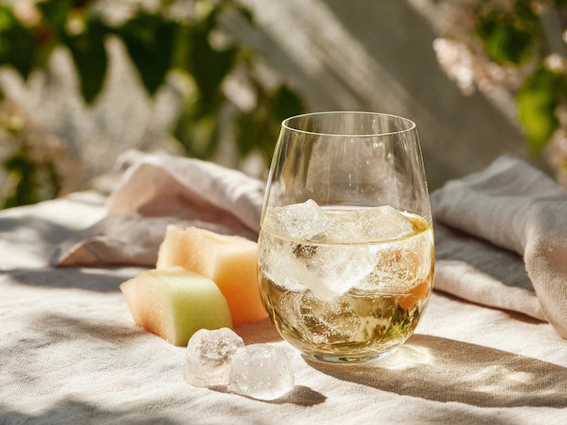
Image Credit corkframes.com
Another school of thought attributes this to the nature of youth: to be young is to explore, to rebel, to find new ways of being and doing.
In any case, rather than ignorance, it is an intentional, measured rejection of the gatekeeping that has historically made wine feel inaccessible. Rather than asking “is this correct?”, they ask, “does this taste good to me?”. Arguably, that may be a more honest interaction and relationship with wine than the usual.
The Celebrity Effect
In fact, there has been several celebrity advocates.
One of the most visible is David Chang, chef and founder of the Momofuku restaurant group (including the now-defunct restaurant Momofuku Ko held onto two Michelin stars for over 10 years) whose opinions travel fast both in America and globally. On one of his podcasts, he admitted that iced wine “tastes like gold”.

Brigitte Bardot holding a glass of iced wine; image credit Pierluigi Praturlon, Reporters Associati & Archivi/Mondadori Portfolio
Brigitte Bardot might have been one of the earliest celebrities to publicly enjoy wine with ice; the iconic French actress famously enjoyed large glasses of rose with ice whenever she was one of her summer getaways in Saint-Tropez on the French Riviera.
More currently,Martha Stewart puts ice in her whites and rosesMartha Stewart puts ice in her whites and roses, and even encourages her fans to do the same. Taylor Swift was seen enjoying a glass of white filled with ice on the Netflix documentary Miss Americana.
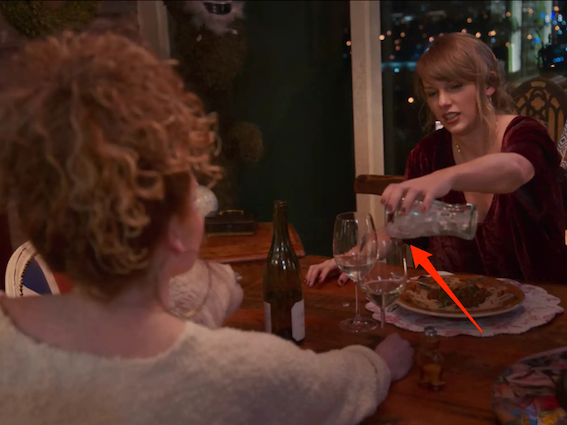
Taylor Swift pouring ice into wine; screenshot credit Tremolo Productions/Netflix via businessinsider.com
The widely recognised celebrity effect plays its role here, too; driving a massive cultural shift. Respected industry publication the drinks business notes that in 2022 America alone, up to 43% (!) of all wine drinkers claimed to put ice cubes in their wine.
Wines Made For Ice
Hardly surprising then – and perhaps rather revealingly – some major houses have launched products specifically designed to be served over ice. Think Moët & Chandon which introduced the Moët Ice Impérial, a Champagne designed for ice service, with a slightly higher dosage (residual sugar) to account for dilution; and Veuve Clicquot with their RICH, also intended to be served over ice or with mixers.
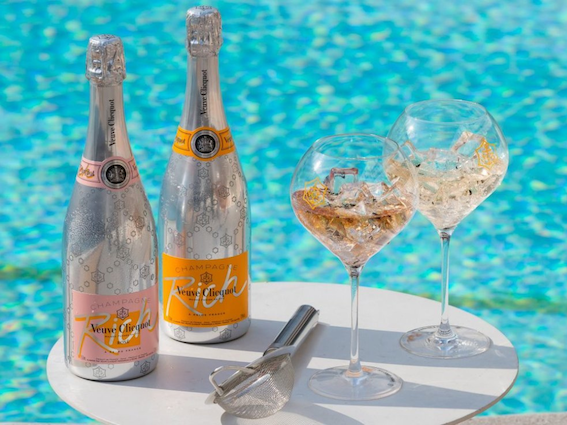
Clicquot Rich by Veuve Clicquot; Image Credit Arnaud Guffon/Veuve Clicquot via Baroque Lifestyle
Vinvovalie, a major wine cooperative from the Southwest of France, custom-built a standalone brand to retail wines made for serving with ice – called Rosé Piscine, named after the Southern French term for rose wine served on ice.
They’re not the only ones though they are the earliest having been established since 2005. About a decade ago, actress Diane Keaton founded The Keaton winery – specifically producing wines made for serving with ice.
BUT WHAT DO THE SOMMELIERS ACTUALLY RECOMMEND?
Even the most sympathetic to the case for ice will generally advise against it as a first resort – excepting the labels made for ice.
The professional consensus is that there are many alternative ways to chill your drink without having to compromise or sacrifice the aroma, flavours and evolution of a well-made wine.
The Alternatives
- An Ice Bucket: the traditional method and still one of the most efficient and effective. Equal parts ice and water, with the bottle submerged to the neck, chills without introducing dilution or overcooling.
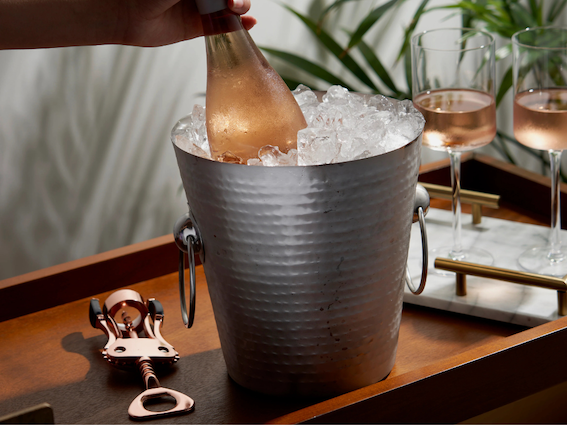
Viski Ice Bucket; image credit viski.com
- Damp Paper Tower: wrap this around a bottle and place it in the freezer for 20 to 30 minutes – this cools a wine quickly and evenly. Avoid leaving it for much longer because freezing wine significantly damages its structure.
- Whiskey Stones or the wine-specific “wine gems”: these small non-porous cubes or spheres are kept in the fridge and dropped lightly into a glass to slightly chill wines without dilution. Wand-shaped versions allow drinkers to dip and swirl, then remove from glass so the drinker can still sip with convenience. One caveat: if the stones are too heavy, it might be more difficult to swirl the glass and sharp edges can scratch thin crystal stemware.
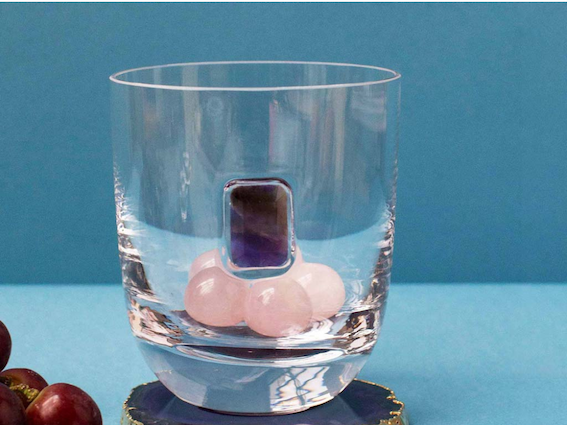
Vida Wine Gems - Rose Quartz; image credit annanewyork.com
Panneer’s own preference when guests request for ice in wine?
“I would politely suggest an alternative approach such as chilling the bottle further by immersing it in an ice bucket with a small amount of salt to accelerate temperature regulation. This allows the wine to be enjoyed at a colder temperature without compromising on its balance or character.”
ICE ICE BABY
If you really haven’t a chance or time to use the sommelier-recommended alternatives and you want your every sip to be ice-cold, here are some principles to keep in mind so every sip stays delicious.
Choose The “Right” Wine
There are specific types of wine that work better with ice: light, fruit-driven with high natural acidity. These are wines where freshness and immediacy matter more than complexity and structure.

Ice in Rose Wine; Image Credit Wine Enthusiast
Vincent Kwong specifies:
“[For] a light, fruit-driven style of, say, Rose wine, or a straightforward type of sauvignon blanc or unoaked chardonnay, I think it is okay to introduce ice to the glass.”
The unspoken implication, then, is that structured reds, complex whites or any wine of vinous ambitions should be kept well away from the ice tray!
Davide reflects:
“…adding ice can work with rosé or light white wines, especially fresh and fruity styles meant to be refreshing. I would generally avoid ice with red wines, particularly structured or aged ones, because it alters the wine too much.”
Size Matters
Large, dense spheres or blocks melt slowly so that water is introduced much more slowly; it gives a longer window in which the wine remains close to the winemaker’s intended expression.
In The Clear
Clear ice – free of visible bubbles – indicates that the water used was pure. This is the best ice to use since it affects how the flavours are affected as the ice melts. Bubbly ice is made from water with higher mineral or air content which can impart off-flavours or greater oxidation to whatever it chills. For a drink as sensitive as wine, this is a weighty consideration.
THE THIRD WAY – Wine-Based Cocktails
An elegant solution to the entire dilemma of ice or wine is to not choose at all. Just build a drink in which ice belongs by design!
Wine-based cocktails have a long history and, in many cases, more deeply embedded in their culture of origin than the concept of wine service itself. More practically speaking, they are also ideal vehicles for wines past their prime or simple enough that no one feels pained by turning them into cocktails.
Think:
- Sangria – classic Spanish wine punch, traditionally built on red wine with citrus, brandy and fruit. Served over ice! Now the white and rose versions are also popular.
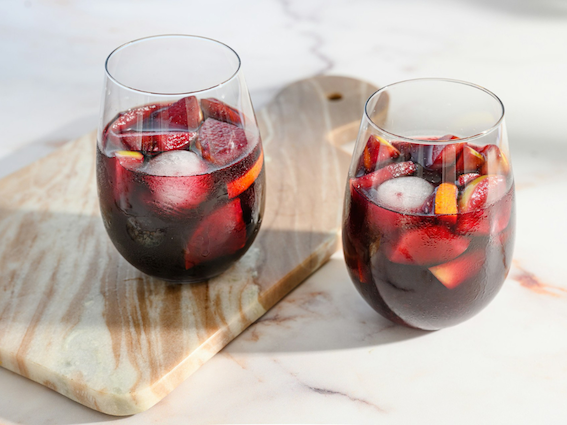
Sangria; Image Credit Insieme Wines
- Spritz – a light effervescent tipple featuring Aperol or Campari with Prosecco and soda. White wine spritzes are also widely enjoyed.
- Kalimotxo – a celebrated Basque Country dive mix with a fun story, this combines equal parts red wine and Coca-Cola over ice. Basque locals like to add a bit of lemon or lime to brighten up the flavours.
In all three cases, ice is a structural component built into the drink’s DNA. Dilution is expected, accounted for and – when the balance is right – part of what makes the drink work.
************
So the final verdict? A very stereotypical “it depends”.
In a fine dining room, with a wine of genuine complexity and a sommelier who has taken care to serve it at the right temperature, ice is an intrusion.
In a garden in summer, with a long afternoon ahead of you, ice can be a reasonable concession to the heat — particularly if the ice is good, the cubes are large, and the wine is “right”.
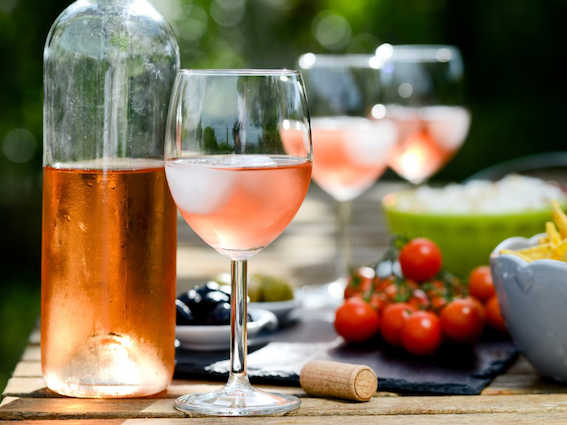
Image Credit The Kitchn
What the professionals agree on is this: if you have the choice, chill the bottle before the glass. But if you don't — or if it's simply that kind of afternoon — pour sensibly, choose wisely, and sip happily!