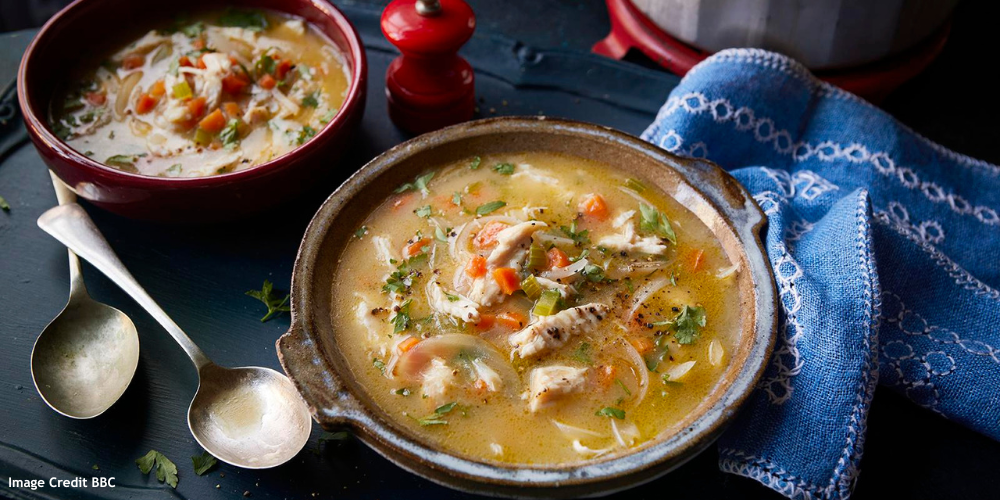
Along with Easter, it's been many months of indulgence. We have to confess, though, that the food has been high fat, high sugar, and high carb; flavourful but heavy, rich and dense, and we haven’t been disciplined at all. So we can’t help but feel that it’s time to refresh and reset ourselves and our digestive systems with something gentle and nourishing.
What better way than to “soup” it up?
We certainly don’t mean to that one should only drink soup for breakfast, lunch and dinner though there certainly was a similar diet plan some years ago. What we mean instead is that adding soup to your meals is a wonderful way of balancing out your meals.
GENTLE NUTRITION
Most Singaporeans generally enjoy soup – often simply having a soupy bowl of noodles or soup with rice as a meal. Cultural and heritage plays a large part in this: think Cantonese double-boiled broths and Teochew bak kut teh, the Tamil rasams and sambars, and Malay sups – buntut, soto, tulang.
In fact, not only do people enjoy drinking soup, they also believe strongly in the health-giving properties of soup. And science does bear out this belief.
The gentle way soups are cooked mean that the soup ingredients will release their nutrients into the liquid, making these nutrients much more bio-available. This, in turns, means digestive processes are much more gentle to your body even as you absorb more of the good stuff.

Soups also contribute to the body’s hydration levels, essential for immune function. And depending on the ingredients you add and eat, soups can increase your lean protein and fibre intake.
Thanks to this and to the rose-tinted power of nostalgia, drinking soup often feels extra comforting: soup soothes your body and soul.
LIGHT YET SATISFYING
Also, if you – like the GastroSense team – have gained a little extra padding over the last few months and are thinking of ways to shed it, adding soup to your meal is a great, clinically proven strategy.
For instance, drinking a light soup at the very beginning of your meal reduces total calorie intake by 20%. And it seems that soups increase the feeling of satiety – more than eating only solid food – and for good reason. Soup slows the gastric emptying process i.e. it increases the time it takes for your stomach to digest food and empty itself.
In short, you feel full longer with fewer calories – great for people looking to lose weight, and – dare we say it? – to fatten the wallets.
Fortunately, it’s easy to find high quality soup options in Singapore. Here are some of our favourites!
PS: If you've been inspired by this, each brand's press kit link can be accessed from the sub-header!
A-LA-CARTE OPTIONS
When you want to pick and choose the soup that best suits your palate.
Gilmore & Damian D’Silva
In the premium casual Gilmore & Damian D’Silva, diners enjoy the profound flavours of dishes created through the unstinting dedication to the value of patience and “doing it right”. Everything served is made from scratch, using traditional methods.
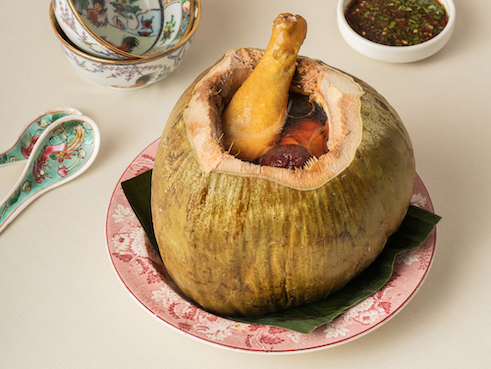
One of our favourites is the Nourishing Chicken Soup in Coconut ($28++), a profoundly flavourful dish created by key kitchen staff Chef Chit Pang as an homage to his grandmother. A medley of Chinese herbs—red dates, wolfberries (goji berries), codonopsis root, licorice, Solomon’s seal, cordyceps flower, and Chinese yam—is steamed together with free-range chicken from GG poulet. Coconut water and Hakka yellow wine are then added to the soup, then further steamed inside the coconut husk. Once upon a time, this soup was reserved for special occasions only; now, thanks to Gilmore and Damian D’Silva, everyday can be a special occasion.
Red House Seafood
One of Singapore’s oldest family-owned restaurants, Red House Seafood (also affectionately termed Red House) is renowned for its exquisite Nanyang-style Seafood cuisine; ingredients of outstanding provenance; and its adherence to ‘honest’ cooking, without compromise.
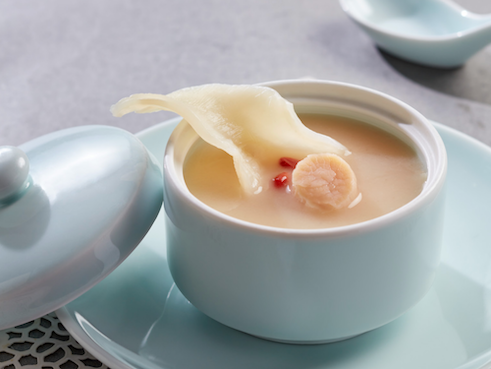
The latter is especially evident in the nourishing soups available in their menu. We’re especially enamoured with their Double Boiled Conpoy & Fish Maw Cartilage Soup ($26++ per person). Conpoy or dried scallop, fish maw, big pork bones, Jinhua ham, shark cartilage and the fruity Sarawak black pepper is double-boiled for at least 6 hours. The resulting creamy golden broth is rich in collagen, protein and antioxidants; and equally rich in flavour.
Shisen Hanten by Chen Kentaro
As Singapore’s sole specialist in Chūka Szechwan Ryori – distinctive Japanese-Szechwan cuisine, one-Michelin-starred Shisen Hanten by Chen Kentaro carries forward the rich culinary heritage of Japan-based Shisen Hanten whose founder is known as the “Father of Szechwan Cuisine” in Japan.
Merging complex flavours of Szechwan cuisine with the delicate nuances of Japanese culinary techniques, the Singapore restaurant combine this with premium ingredients sourced at peak seasonality from skilled artisans to create exquisite dishes that bring out the best of both Chinese-Szechwan and Japanese cuisine.
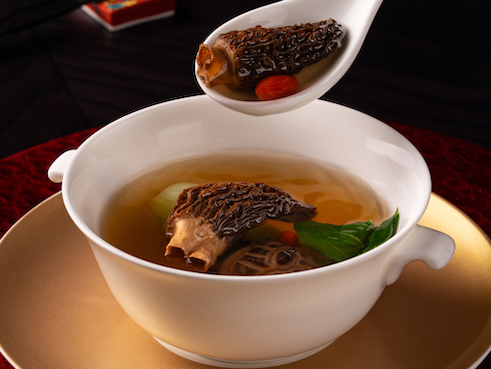
Their Double-Boiled Morel Mushroom Soup ($16++ per serving) is an especially good showcase of this culinary expression: earthy, intense morel mushrooms and fragrant, savoury flower shiitake (the most highly prized varietal of shiitake mushrooms) are gently simmered to extract their rich flavours. Naturally sweet goji berries, salt and a touch of soy sauce are added to create a soup both delicate and layered with flavour.
TASTING MENU ELEMENT
When a multi-course meal includes a course of soothing liquid nutrition
Fat Cow
Fat Cow’s new weekday lunch experience – the Wagyu Sushi Omakase – is an intimate offering that spotlights Japanese culinary traditions through a Wagyu-focused sushi narrative. The menu highlights prized ingredients such as Akune Gold A5 Wagyu from Kagoshima — a premium Japanese beef recognised for its exceptional marbling and heritage.
Apart from a showcase of premium ingredients, the omakase menu is also a display of Head Chef Shingo Iijima’s culinary mastery: each dish distills years of experience into preparations that honour both ingredient and tradition.
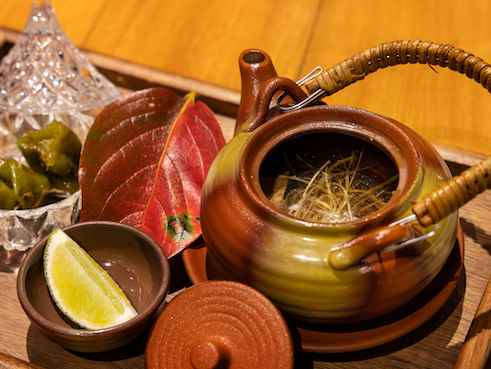
This applies especially to the opening course: a richly flavourful Vegetable & Wagyu Sake Soup where Wagyu shank is slow-cooked for six hours with kelp and sake, then served with Kyoto sweet chilli pepper that has been deep-fried and lightly simmered in soy sauce and bonito flakes. This is a deeply luxurious, complex soup – where the deep rich umami of the Wagyu shank extracted into the broth is lifted by the mild vegetal sweetness of kelp and the Kyoto peppers.
Oumi At 1-Arden
Situated in CapitaSpring 51 levels aboveground, Oumi at 1-Arden offers breathtaking city views and contemporary Japanese ‘kappo’ cuisine. From the open kitchen that offers guests a chance to watch the cooking process and banter with chefs come plates and bowls showcasing creations that highlight the pure flavour and freshness of the ingredients.
This plays well in the Seafood Soup ($10++ as an add-on to their Set Lunch) where the delicacy of seafood is off-set by the clean purity of their house-made tofu and grounded by the rich umami of Hokkaido seaweed. Gentle and comforting, it’s the perfect accompaniment to a stressful weekday.
Restaurant Born
This February sees the arrival of Born’s fourth menu – an eight-course experience that deepens Chef Zor Tan’s signature expression of French technique and Chinese tradition. This latest experience crystallises the essence of Zor’s professional and personal journeys. It consummates his finesse with the French method and his deep affinity for the Chinese tradition. By plumbing yet again the depths of his inspiration, Zor Tan pushes the boundaries and invites the diner to rediscover the familiar in a different light – and experience the delights of Born as if anew.
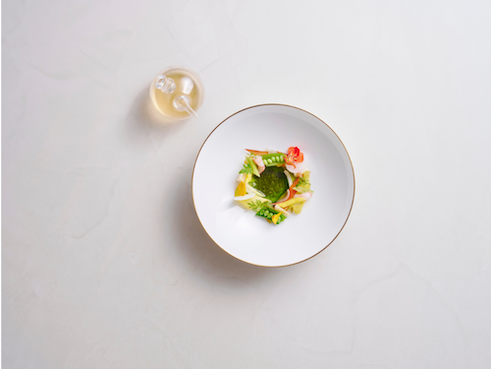
This renewal is especially evident from the first course, Two Beginnings, One Dish. As its name suggests, this dish has two main components – a salad and a soup; and is derived from the idea of combining Western and Chinese starters. The salad is a creative composition of seasonal Chinese vegetables such as bamboo shoots and jicama, dressed in a sauce made with otoro fat. A hot consommé made from tamarind, pickled mustard greens, and chicken is poured over the mix. The result? An appetite-whetting broth that gratifies every single sense all at once: fresh and savoury, rich and tangy, filled with crunchy chewy elements to get the salivary glands moving.
ADDRESSES
- Fat Cow: Camden Medical Centre, #01-01/02, Singapore 248649
- Gilmore & Damian D'Silva: National Gallery Singapore, #01-02/03, Singapore 178957
- Oumi, 1-Arden: CapitaSpring, #51-01, Singapore 048948
- Red House Seafood: Grand Copthorne Waterfront Hotel Singapore, Level 2, Singapore 169663
- Restaurant Born: 1 Neil Rd, #01-01, Singapore 088804
- Shisen Hanten by Chen Kentaro: Hilton Singapore Orchard, Level 35, Singapore 238867